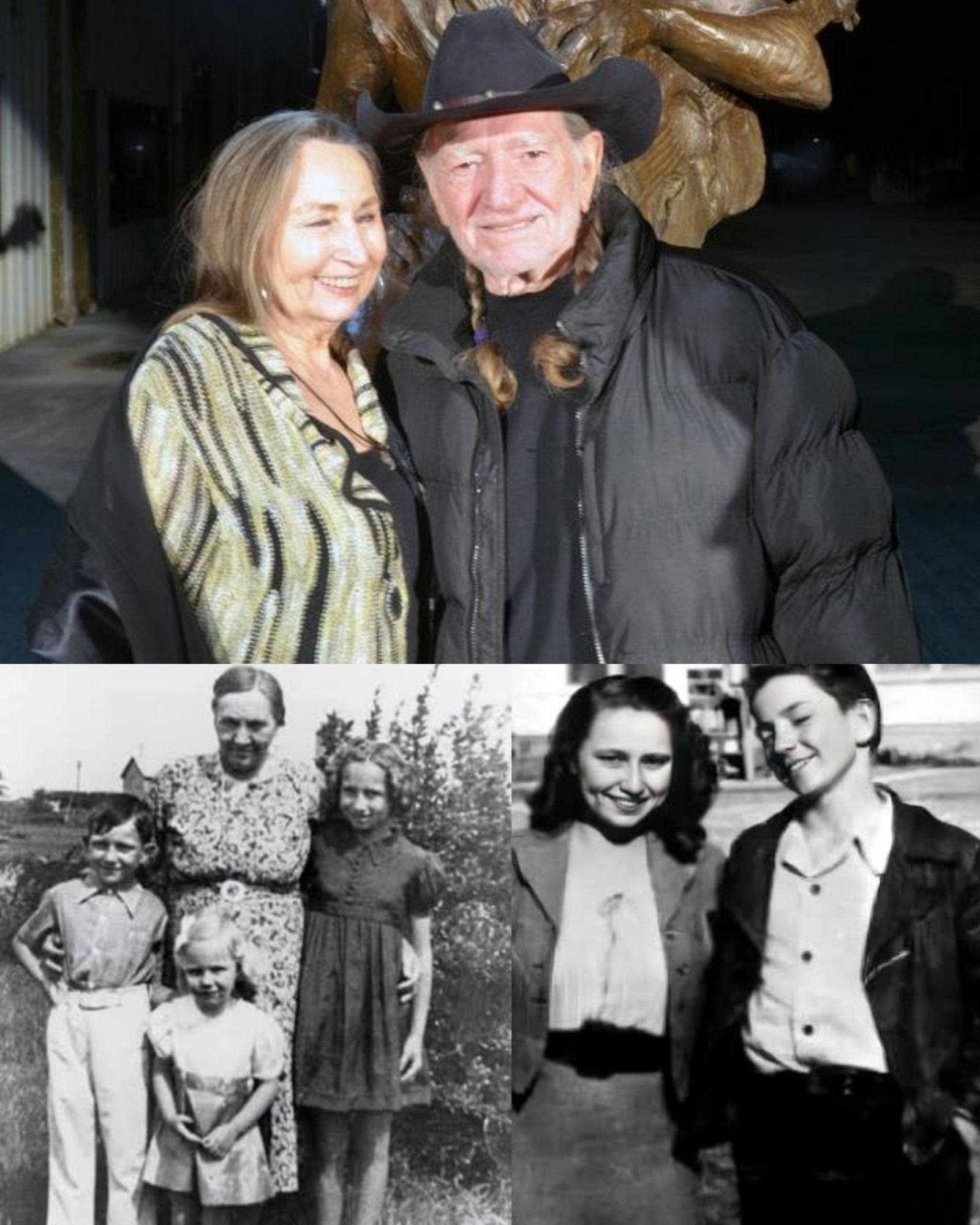
Long before the braids, the bandana and the battered guitar named Trigger, Willie Nelson was a red-headed boy in Abbott, Texas, trying to figure out how not to spend his life bent over a cotton row. The answer showed up when he was about ten years old, in the form of a blacksmith with a family band.
That blacksmith was John Rejcek. His family orchestra, full of brass and drums, played polkas, waltzes and schottisches at Czech dances around the area. Rejcek had sixteen children of his own, but he took a liking to the young guitar player. According to biographer Joe Nick Patoski, Rejcek paid the ten-year-old six dollars for a night’s work. Willie Nelson himself later remembered the pay as eight to ten dollars a night. Either way, the math was clear to a boy from Abbott. One night of music paid about as much as a good day in the cotton fields, and it didn’t leave his fingers throbbing from the thorny cotton burrs.
Years later, Willie Nelson admitted he wasn’t the best player in that big polka band. But, as he put it, it was easier than picking cotton. So he stayed.
Raised by Mama and Daddy Nelson
Willie Hugh Nelson was born in Abbott on April 29, 1933, in the middle of the Great Depression. When he was six months old, his mother, Myrle, left. His father, Ira, later remarried and moved away. Willie Nelson and his older sister, Bobbie Nelson, were raised by their paternal grandparents, Alfred and Nancy Nelson, whom the children called Daddy and Mama Nelson.
Alfred Nelson was a blacksmith. Nancy Nelson was the music teacher of the house. She taught Bobbie Nelson to play piano, and the grandparents made sure Willie Nelson had music too. When he was six, his grandfather bought him his first guitar and taught him a few chords.
Only a few months later, Alfred Nelson died of pneumonia. The little boy who had already lost a mother and a father to the road had now lost the man who put a guitar in his hands. Willie Nelson wrote his first song at seven.
Summers in the Cotton Rows
Abbott was a small farm town, and in the summer the Nelson family picked cotton alongside their neighbors. It was hot, slow, backbreaking work under the Texas sun. Willie Nelson never liked it. The burrs scratched and stung, and a day of dragging a sack down the rows paid very little.
That is what made Rejcek’s offer feel like a revelation. Music paid. Music didn’t hurt. And standing on a bandstand felt like the place he was supposed to be.
“You Promised Me You Would Never Go on the Road”
Not everyone at home was thrilled. Mama Nelson was a devout, church-going woman, and she had warned her grandson about the sinful things that went on in beer joints. When she learned he was going to play at a place six miles away, she reminded him that he had promised never to go on the road. Willie Nelson later joked that to her, six miles down the highway counted as the road.
He kept finding ways to play anyway. He sang on the courthouse steps in nearby Hillsboro. At Frank Clements’s barbershop in Abbott, he shined shoes and sang a song for fifty cents a pair. At thirteen, he was hired to play a wedding with a local Czech dance band. He promised Mama Nelson he would be home by eleven, played the gig, and came home with five dollars.
From Abbott to Farm Aid
Decades later, Willie Nelson was one of the most famous musicians in America. In the 1980s, family farmers were facing their worst crisis since the Great Depression. Prices and land values fell, interest rates rose, and tens of thousands of farms went under.
“I saw farmers around me going out of business cause they couldn’t pay their bills.” — Willie Nelson
After Bob Dylan remarked at Live Aid that some of the money should help America’s own farmers, Willie Nelson joined with Neil Young and John Mellencamp to organize a concert. They put it together in six weeks. On September 22, 1985, the first Farm Aid filled Memorial Stadium in Champaign, Illinois, with 80,000 people. It sold out in a day and raised more than seven million dollars for family farmers.
Farm Aid became an annual tradition, and by its fortieth anniversary in 2025 it had raised nearly eighty million dollars. For a man who grew up in a town that lived by the harvest, it was never just another benefit show.
Did you or your family ever work the fields when you were young? We would love to hear your story.