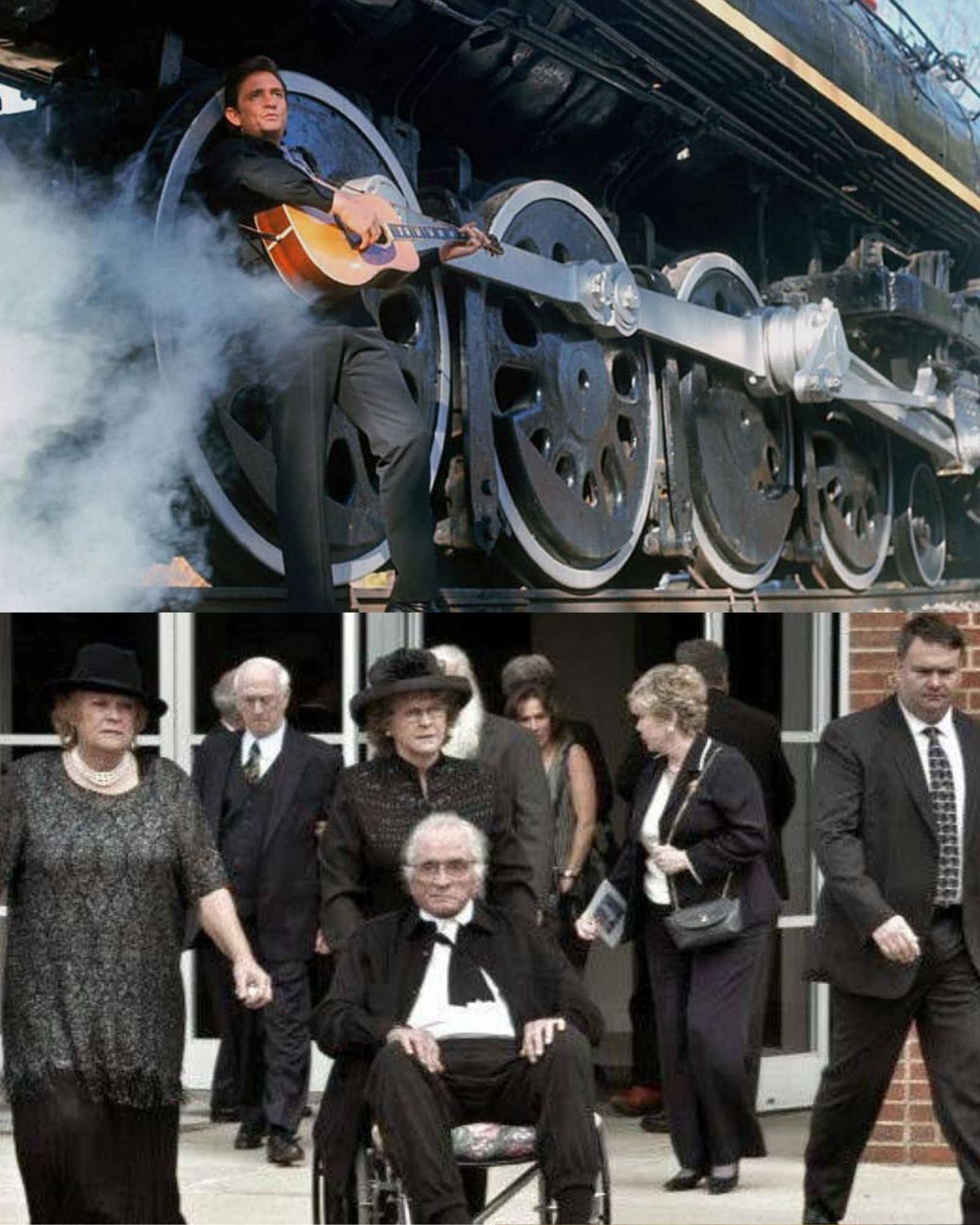
Most people would expect a dying man’s final song to be heavy and sad. Johnny Cash wrote something else. The last song he ever wrote is about his own body being boxed up and loaded onto a train, and it is one of the most upbeat things he recorded in his final years. It is called “Like the 309.”
A Train Called the 309
The song imagines Johnny Cash’s final ride. He is waiting at the depot for the whistle of the 309, and when it comes, he wants his box put on board. Along the way he pokes fun at his own failing lungs. He jokes that it should be a long while before he has to meet death, but it sure would be nice if he could just catch his breath. He tells everyone to come take a look and see that he is doing fine. Then they can load him up.
According to Steve Turner’s family-authorized biography, the song was first titled “Asthma Coming Down Like the 309,” and Cash himself thought of it as a humorous song. Even the shortened title carries the joke: the wheeze in his chest sounded to him like a train coming down the line.
The Summer of 2003
By then, Johnny Cash’s body was failing. He had been diagnosed in 1997 with a serious nerve disease and also battled diabetes, which had taken much of his eyesight. He needed a wheelchair to get around.
Then, on May 15, 2003, June Carter Cash died. They had been married 35 years. The day after she died, Johnny Cash called producer Rick Rubin and asked to get back to work. He needed something to keep him going.
Rick Rubin set up a studio in a bedroom of Cash’s home in Tennessee and sent a recording engineer who stayed on call for most of the rest of Cash’s life. Every morning, Cash would phone the engineer to say whether he felt strong enough to record that day. Rubin later said that after June died, Johnny was prepared to die. He kept working anyway.
Recording the 309
In August 2003, Johnny Cash put “Like the 309” on tape. Turner’s biography places him in the studio working on it on August 14. Other accounts date his final session to August 21, when he recorded “Like the 309” along with “Engine 143,” a Carter Family song he sang for a tribute album his son John Carter Cash was putting together.
His voice was a shadow of the booming baritone the world knew. Reviewers who heard the finished track noted that he sounds short of breath, and he barely makes it to the end of some lines. At one point on the recording, he breathes out, right into the microphone.
He did not hide any of it. He sang about it.
Back Where It Began
Trains had run through Johnny Cash’s music from the very start. His first single for Sun Records in 1955, “Hey Porter,” was about a young man on a train heading home to Tennessee, asking the porter how much farther it was. He later made whole albums about the railroad, including Ride This Train in 1960.
Nearly fifty years after “Hey Porter,” the last song he wrote put him back at the depot one more time. This time, the train was taking him home for good.
Three Weeks Later
Johnny Cash died on September 12, 2003, at the age of 71, from complications of diabetes. It was less than four months after June. He was laid to rest beside her in Hendersonville, Tennessee.
The tapes from those final months sat in storage. Rick Rubin admitted he dreaded going back to listen to them. When he finally did, he and musicians including Mike Campbell and Benmont Tench of Tom Petty’s Heartbreakers built gentle, mostly acoustic arrangements around Cash’s vocals.
In July 2006, the songs were released as American V: A Hundred Highways. “Like the 309” was one of only two Johnny Cash originals on the album, and the album went to No. 1 in the United States. Rubin called these recordings Johnny’s final statement.
One Last Breath
“Like the 309” is not a song of fear. It is a man who knows the train is coming, cracks a joke about it, tells everyone he is fine and asks them to see him off. The breath you can hear on the recording is not a mistake that someone forgot to clean up. It is Johnny Cash, still showing up for work, still telling the truth.
Have you heard “Like the 309”? What does it make you feel when you listen to it now? Share your thoughts in the comments.