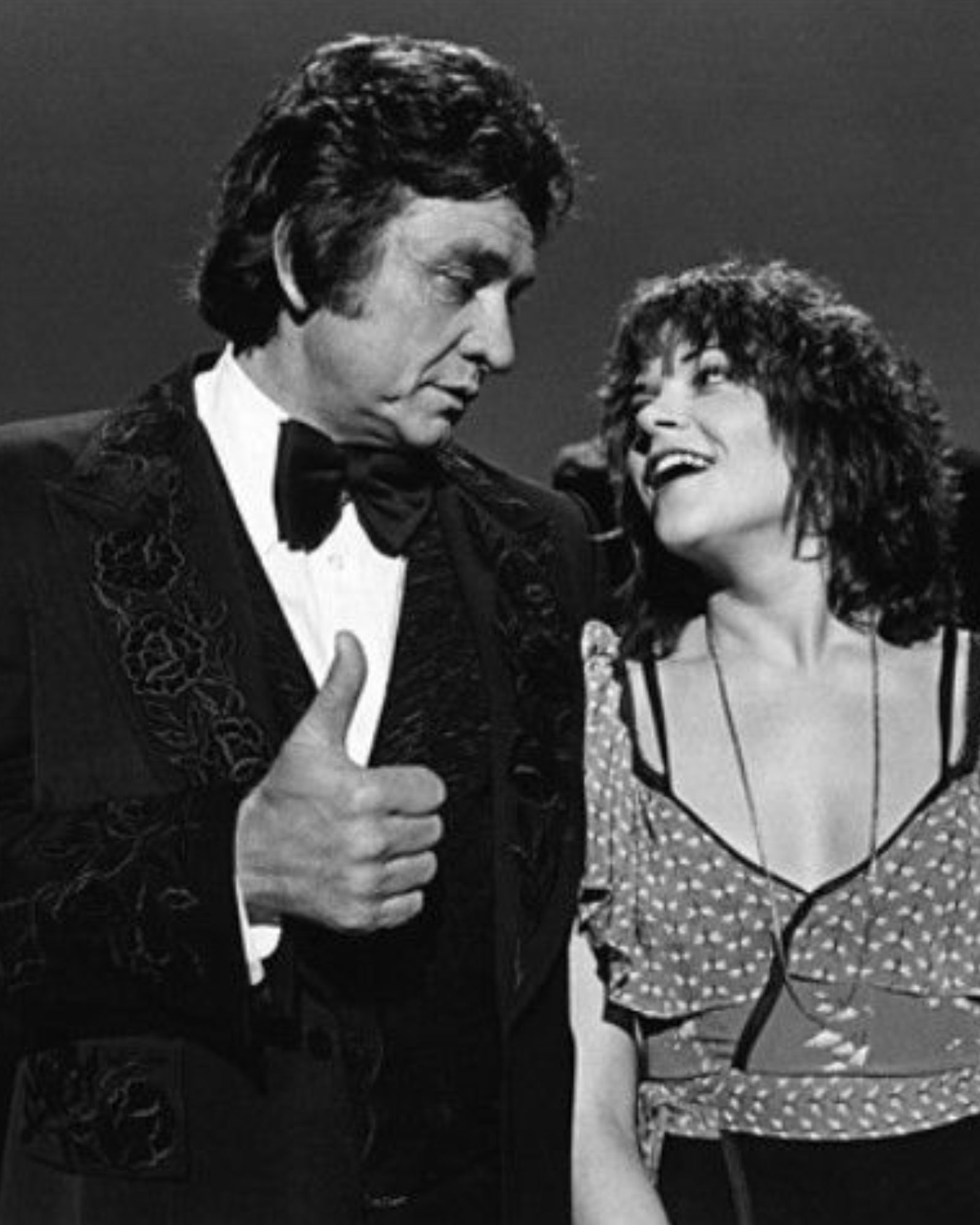
In the summer of 1973, Johnny Cash’s tour bus was rolling through the South. His daughter Rosanne Cash, 18 years old and just out of high school, was riding along. At some point Johnny Cash mentioned an old song. Rosanne Cash didn’t know it. He mentioned another. She didn’t know that one either.
Rosanne Cash later said her father became genuinely alarmed. In his eyes, these songs were her own musical family tree, and she couldn’t name the branches. So Johnny Cash did something about it. He sat down and spent the rest of the afternoon making her a list.
“This Is Your Education”
Across the top of a sheet of yellow lined paper, Johnny Cash wrote “100 Essential Country Songs.” But the list reached far beyond what most people call country music. There were early folk songs, protest songs, Delta blues, Southern gospel, Appalachian ballads and the first country records. Rosanne Cash would later say it might have been better titled “100 Essential American Songs,” because everything that fed into modern country music was on it.
At the end of the day, Johnny Cash handed the page to his daughter and told her:
“This is your education.”
Rosanne Cash understood even then that she was holding something important, and she set about learning the songs.
A Daughter Making Her Own Name
Rosanne Cash had grown up largely in California after her parents’ marriage ended, and her teenage ears were tuned to the Beatles and pop and rock radio. Joining her father’s road show gave her work. It also put her back near a father whose life had so often happened somewhere else.
After she learned the songs, she put the list away. She released her debut album, Right or Wrong, in 1979 and went on to a string of No. 1 country hits in the 1980s, including “Tennessee Flat Top Box,” a song her father wrote. In 1985 she won a Grammy for “I Don’t Know Why You Don’t Want Me.” Through all of it, she worked hard to be known as Rosanne Cash, not just as Johnny Cash’s daughter.
Finding the List Again
Johnny Cash died in September 2003, a few months after June Carter Cash. Rosanne Cash’s mother, Vivian Liberto, died in 2005. Rosanne Cash poured those losses into her 2006 album Black Cadillac.
After her father’s death, she came across the list again among old papers. She has said what amazed her most was that, through all the moves of her life, she had never lost it. While touring behind Black Cadillac, she began telling audiences about the afternoon her father made her a list. People kept coming up afterward to ask the same thing: when was she going to record it?
“This Is Your List”
Her husband, the guitarist and producer John Leventhal, told her she had to do it. Her first reaction, she said, was simple:
“I don’t want to use my dad.”
John Leventhal answered that it wasn’t her father’s project anymore. It was her list. Rosanne Cash came to agree. It was time to step into that legacy instead of standing apart from it.
Twelve Songs From One Page
The List was released in October 2009, thirty-six years after that bus ride. Rosanne Cash and John Leventhal chose twelve songs, and it was the first album she had ever made entirely of other writers’ songs.
It opens with “Miss the Mississippi and You,” which Jimmie Rodgers recorded in 1932. Bruce Springsteen joins her on “Sea of Heartbreak.” Jeff Tweedy of Wilco sings with her on “Long Black Veil,” a song many fans know best through Johnny Cash’s own recording. She also sings Patsy Cline’s “She’s Got You” and Bob Dylan’s “Girl from the North Country,” a song that intimidated her at first because she remembered her father singing it with Bob Dylan on television.
The album became a Top 10 country album for Rosanne Cash and earned a Grammy nomination for Best Americana Album.
The Next List
Not long after the album came out, one of Rosanne Cash’s daughters called her with a question: when would she get her list? Rosanne Cash has said her own list would look different from her father’s, with songs like “Born to Run” and “Gimme Shelter” on it.
That may be the real gift of that afternoon in 1973. Johnny Cash set out to fix what his daughter didn’t know. What he left her was a way to pass the music down.
If someone made you a list of the songs that matter most, which one would you want at the top?