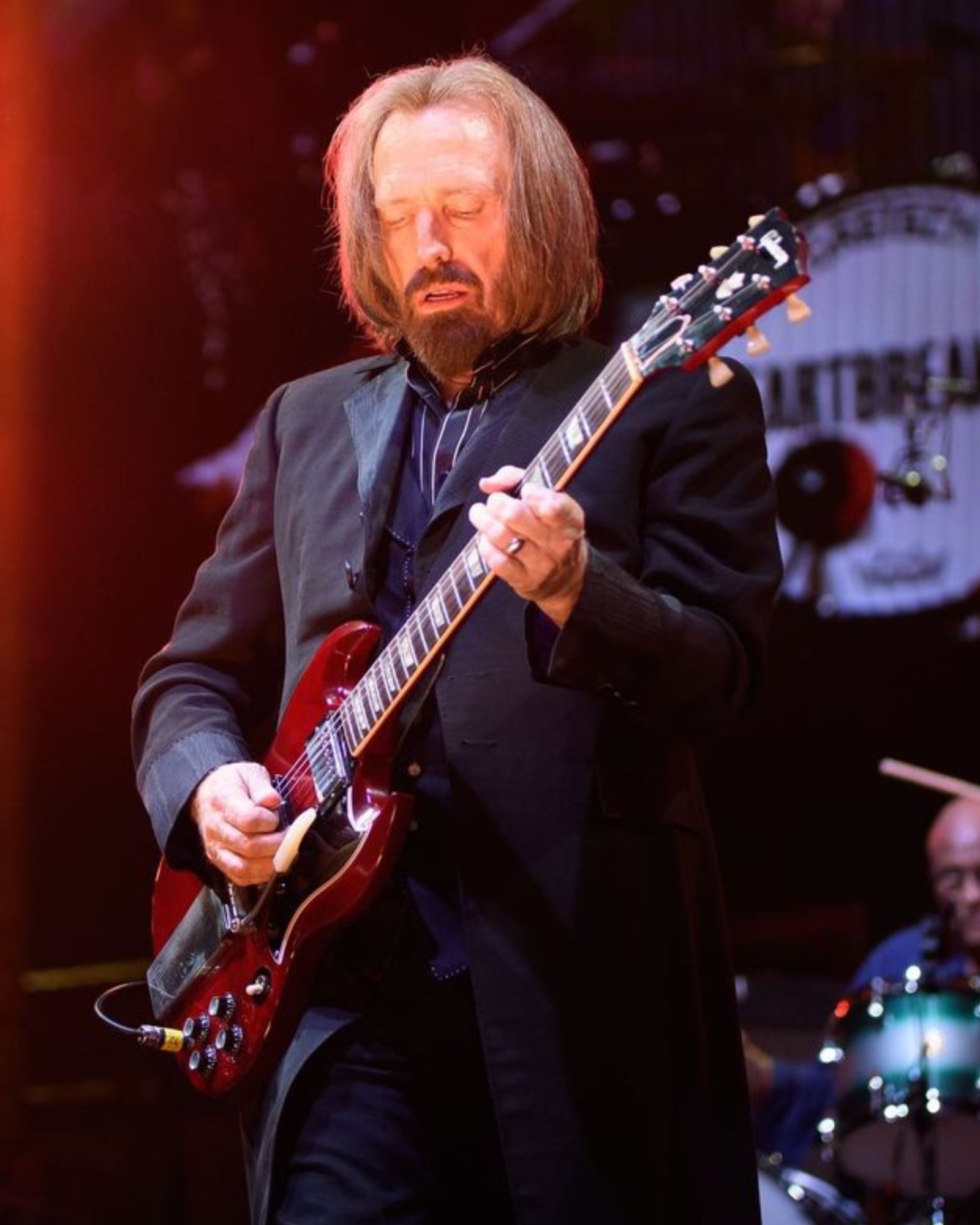
On September 25, 2017, Tom Petty and the Heartbreakers reached the end of their 40th-anniversary tour at the Hollywood Bowl in Los Angeles. The concert was the last of three nights at the venue, a fitting finish to a celebration of a band whose music had accompanied listeners through decades of ordinary life.
Before the closing song, Tom Petty thanked the audience for forty years of support. Then Tom Petty and the Heartbreakers played “American Girl.”
One week later, on October 2, 2017, Tom Petty died at 66. What had been the closing night of a tour became the final concert of a lifetime.
A Celebration of Four Decades Together
The anniversary tour gave audiences a chance to revisit a catalog that had become deeply familiar. For longtime listeners, a Tom Petty song could carry memories of a first car, a difficult breakup, a summer job, or someone no longer around to hear it.
That familiarity was part of the power of Tom Petty and the Heartbreakers. The songs could fill a large venue while still feeling personal. Listeners did not need to know every detail of Tom Petty’s life to recognize something from their own.
At the Hollywood Bowl, the anniversary provided a reason to look backward. Forty years together meant more than a collection of successful records. The milestone reflected the long relationship between musicians and audiences who kept returning to the songs.
Tom Petty’s thanks before the final number acknowledged that relationship simply. The moment did not require a grand announcement. The music supplied the rest.
Why “American Girl” Matters
“American Girl” appeared on the 1976 debut album by Tom Petty and the Heartbreakers. By the final Hollywood Bowl concert, the song had traveled with the band for roughly four decades.
Choosing “American Girl” to close the night brought the anniversary celebration back to an early chapter. The familiar guitar opening connected the established band onstage with the young musicians who had recorded that first album.
There is no reason to turn that choice into a prediction. A closing song can be a beloved concert tradition without being an intentional farewell. The significance changed afterward, when another performance was no longer possible.
For anyone watching footage today, two moments occupy the same frame: the excitement of a band finishing a major tour and the knowledge that Tom Petty would never take that stage again. The audience in the recording belongs to the first moment. Viewers now carry both.
The Work That Was Still Ahead
The tour’s conclusion did not mean Tom Petty had exhausted the possibilities of making music. There were unfinished plans connected to Wildflowers, including an expanded edition of the album and performances that would explore that material.
According to accounts from Tom Petty’s collaborators, a tour centered on Wildflowers had been discussed before attention shifted to the anniversary celebration. The project offered a different kind of musical evening, with room to move beyond the familiar hits.
Those plans make the final concert especially poignant. Looking backward was only part of what Tom Petty was doing. There was still music to revisit, work to complete, and another approach to performing worth pursuing.
A Final Song, Heard Differently
Tom Petty’s death gave the Hollywood Bowl performance a meaning that no anniversary celebration could have anticipated. The recording preserves a working musician thanking an audience and finishing a show with a song that had endured from the beginning.
The sadness comes from how recognizable the moment remains. Concerts end. Musicians leave the stage. Audiences head home carrying the sound of the last song.
On September 25, 2017, that song was “American Girl.” The tour was finished, but Tom Petty still had plans. That distance between completed work and an unfinished future is what makes the final performance so difficult to forget.