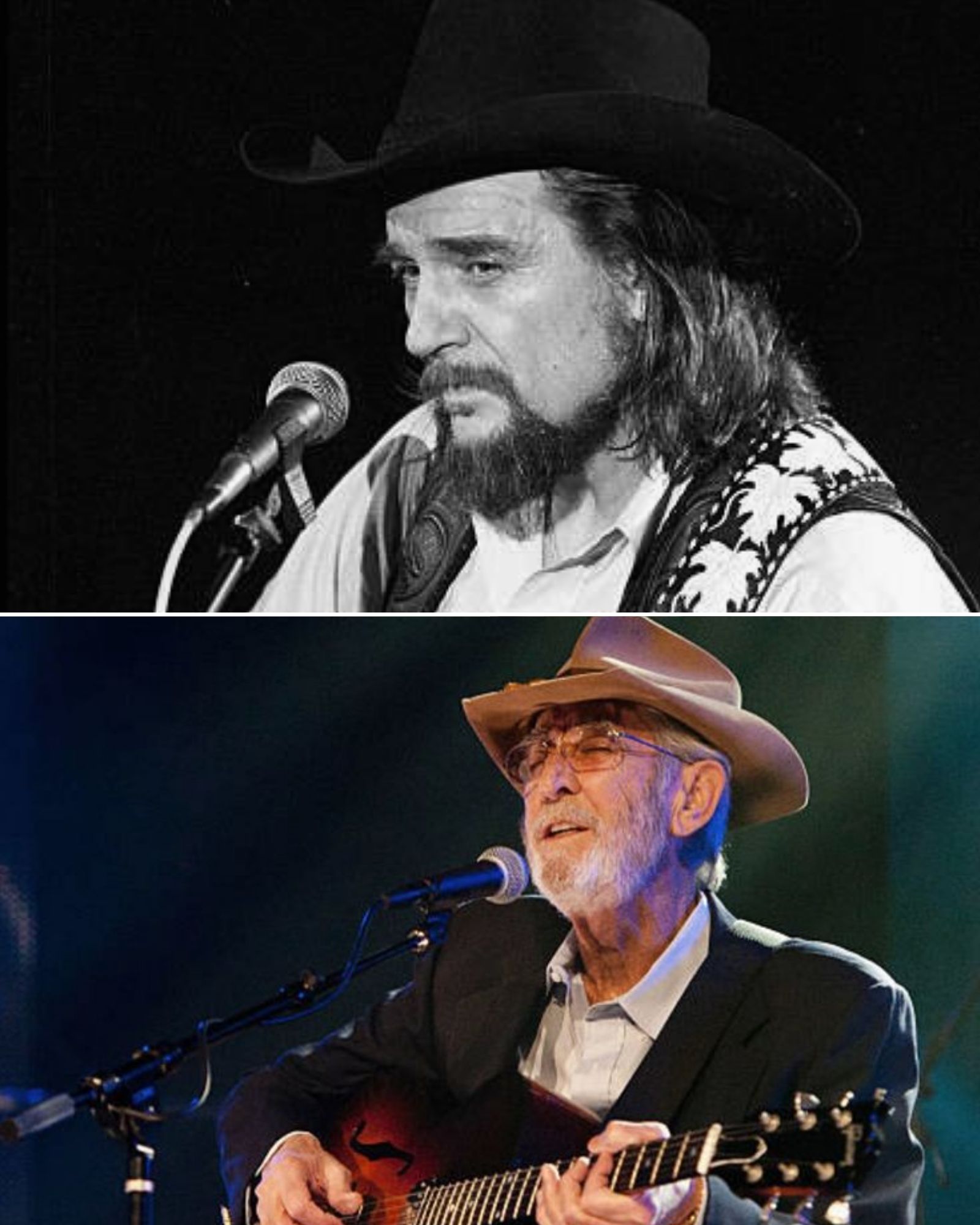
Bob McDill wanted Waylon Jennings to hear a song called “Amanda.” The songwriter’s early attempt to get the song to Waylon Jennings did not succeed. Then Don Williams recorded “Amanda,” and the song finally reached the singer Bob McDill had hoped would hear it.
According to the Country Music Hall of Fame and Museum, Waylon Jennings loved “Amanda” from the moment Waylon Jennings heard the Don Williams version. A song that had failed to arrive through one door had found another way in.
That distinction matters. This was not a story about Waylon Jennings dismissing a song and later admitting a mistake. The documented account describes an unsuccessful effort to deliver the material, followed by the powerful impression Don Williams’s recording made.
A song written in thirty minutes
Bob McDill wrote “Amanda” in just thirty minutes. For a songwriter whose career would depend on discipline and steady work, that quick arrival remained memorable. The Country Music Hall of Fame preserves Bob McDill’s recollection of the song as an unusual gift before songwriting became a much more demanding process.
The subject was simple enough to explain, but difficult to express without sentimentality: a country musician loves a woman and believes that woman deserved a better life.
“Amanda” places that feeling inside an ordinary moment of self-recognition. A man notices the years in the mirror. Music still matters. The life of a working musician still holds its pleasures. Yet love brings another thought: what has that life asked of the person standing beside the musician?
The song allows affection and regret to exist together. There is no need for a dramatic confrontation. The admission itself carries the weight.
Don Williams gave the song its first recorded voice
Don Williams recorded “Amanda” in 1973. The performance suited the quiet intimacy that listeners would come to associate with Don Williams: a measured delivery, an unhurried melody, and room for the words to register.
For listeners, the tenderness can make the song feel like a private conversation. The musician at the center of “Amanda” is not asking an audience for applause. The musician is considering what a shared life has cost someone else.
That recording also became the connection between Bob McDill’s composition and Waylon Jennings. Don Williams’s interpretation helped bring the song to the attention of the very artist Bob McDill had initially tried to reach.
Waylon Jennings made the same words feel different
Waylon Jennings recorded “Amanda” for the 1974 album The Ramblin’ Man. Several years passed before “Amanda” became a single. With additional overdubs, the recording appeared on the 1979 Greatest Hits collection and reached a much wider audience.
In 1979, “Amanda” spent three weeks at No. 1 on the country chart.
The success offers a reminder of the range within Waylon Jennings’s music. The forceful delivery associated with outlaw country could also carry uncertainty and tenderness. On “Amanda,” the roughness of Waylon Jennings’s voice gives the apology an especially exposed quality.
That is an interpretation of the performance, rather than proof that every detail of the lyric describes Waylon Jennings’s marriage. “Amanda” was written by Bob McDill. Its strength lies partly in the room the song leaves for singers and listeners to recognize experiences of their own.
One song, two lasting interpretations
Don Williams and Waylon Jennings did not need to sound alike for “Amanda” to belong in both catalogs. The gentleness of Don Williams and the worn texture of Waylon Jennings bring different shades to the same confession.
Behind those performances sits a small, satisfying piece of country music history: Bob McDill tried to send a song to Waylon Jennings, Don Williams recorded it first, and that recording helped the song complete its journey.
A composition written in thirty minutes took years to become a No. 1 hit for Waylon Jennings. Along the way, “Amanda” found two voices capable of making a husband’s uneasy expression of love sound personal.