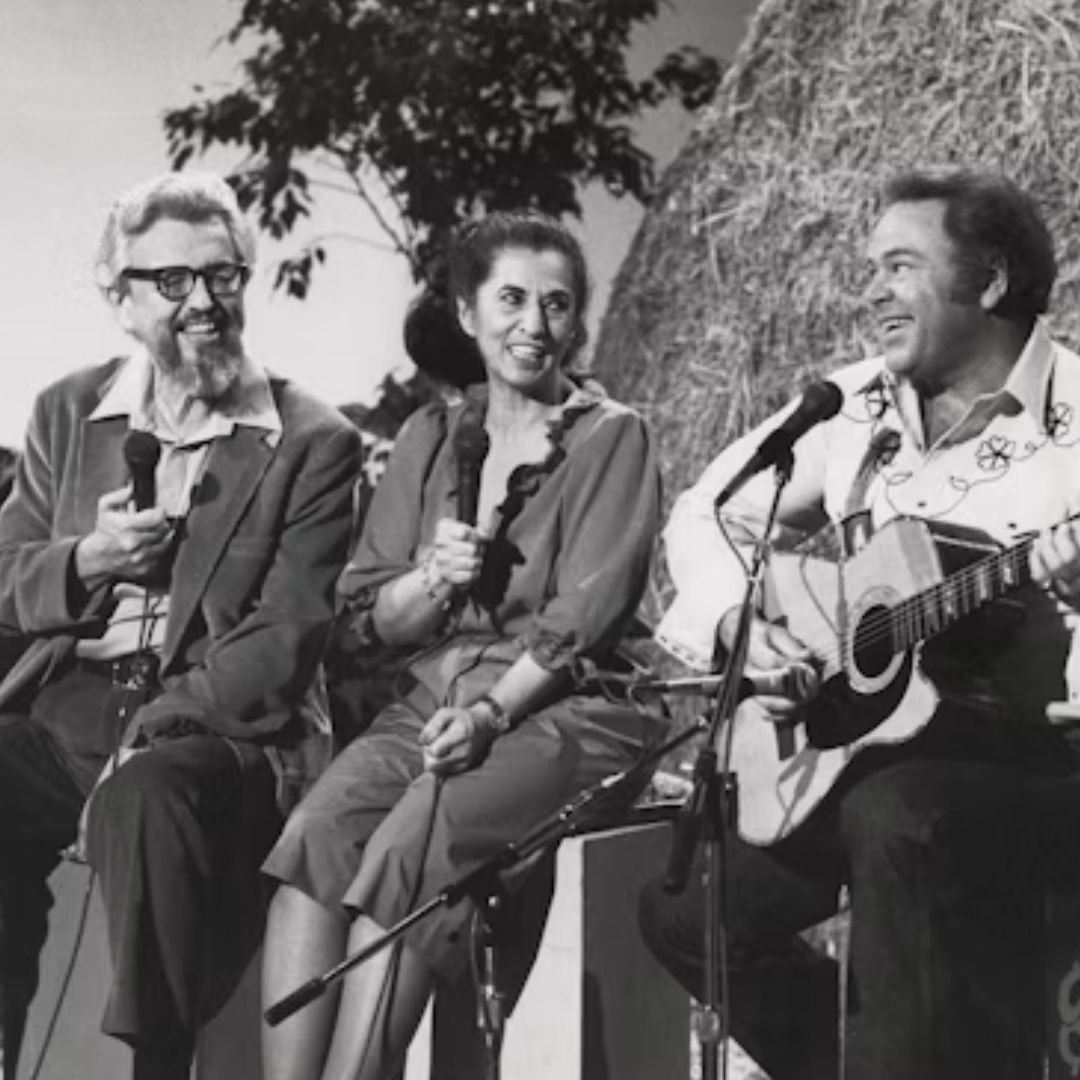
A songwriter had stayed up all night working on something for Roy Clark. Before hearing the song, Roy Clark was already worried about the answer.
The problem was Boudleaux Bryant’s reputation. Boudleaux Bryant and Felice Bryant had written songs that helped define the Everly Brothers’ sound and earned a lasting place in country music. An offer from that songwriting family deserved attention.
But respect could make an ordinary professional decision uncomfortable. What happened if the song simply did not suit Roy Clark?
A Little Guitar at the Hee Haw Studio
In an interview with Voices of Oklahoma, Roy Clark remembered arriving at Hee Haw one morning and finding Boudleaux Bryant in the producer’s office. Boudleaux Bryant was sitting with a little guitar and had news about the night before.
“I’ve been up all night writing you a song.”
Roy Clark’s immediate concern was how to decline gracefully if necessary. Admiring a songwriter did not automatically mean every composition would fit. A singer still had to hear the melody, understand the words, and decide whether the performance could feel honest.
That hesitation makes the memory especially relatable. Most people have faced some version of the same situation: someone offers something with obvious care, and suddenly the pressure to appreciate it arrives before the opportunity to judge it.
Boudleaux Bryant began playing. Roy Clark’s concern quickly disappeared.
“That’s a great song.”
The song was “Come Live with Me.” Credited to Boudleaux Bryant and Felice Bryant, the composition became a major recording for Roy Clark. In 1973, “Come Live with Me” reached No. 1 on Billboard’s country singles chart.
The Singer Behind the Smile
By then, television audiences knew Roy Clark as an entertainer who could make difficult musicianship look easy. Hee Haw brought the picking, jokes, and familiar smile into homes across the country. Roy Clark could hold attention with an instrument before singing a word.
The records revealed another part of that appeal. The Country Music Hall of Fame lists a run of successful country singles that included “The Tips of My Fingers,” “I Never Picked Cotton,” and “Thank God and Greyhound.” Roy Clark’s recording career offered room for tenderness as well as humor.
“Come Live with Me” belongs comfortably in that broader picture. Even the title makes a direct, personal invitation. A performance built around such an invitation depends on the listener believing the voice making it.
For listeners who mainly remembered the comedy, a gentle vocal performance offered another reason to pay attention. Roy Clark’s warmth could carry a record as effectively as the instrumental skill could carry a television appearance.
A Small Moment Behind a Big Record
Chart positions tell us how a recording performed. Memories like this explain how a song entered a singer’s life.
The detail worth keeping is the little guitar in the producer’s office. Before there was a No. 1 record, there was a songwriter ready to play and a singer wondering whether an awkward conversation was coming.
Roy Clark’s account preserves both the professional respect and the uncertainty. Knowing Boudleaux Bryant’s accomplishments did not remove the need to listen. The song still had to earn Roy Clark’s enthusiasm.
That morning, the music supplied the answer. Roy Clark had arrived wondering how to say no. Instead, Roy Clark heard a song worth recording—and country listeners eventually helped carry it to the top.