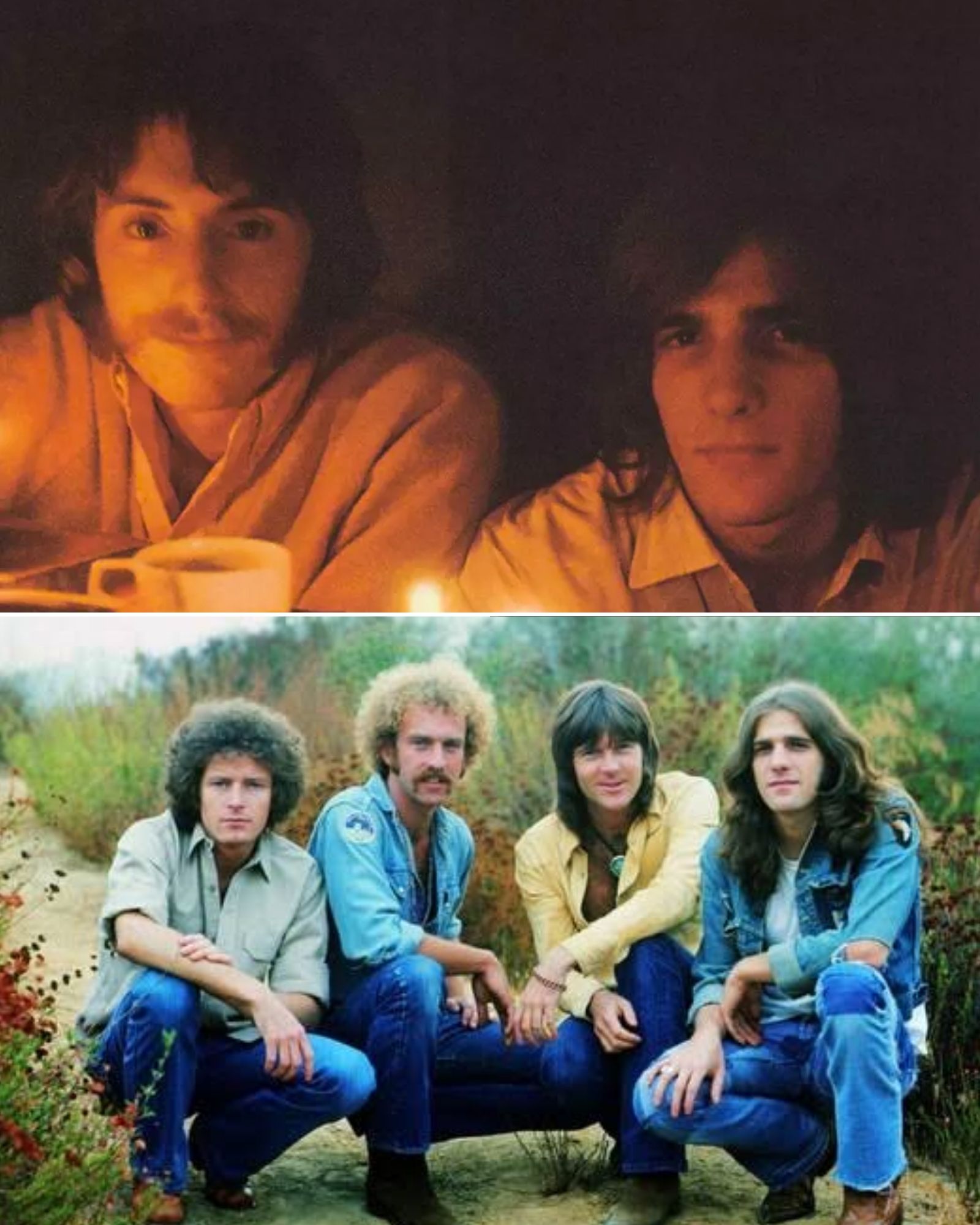
Before the Eagles became one of the biggest bands in the world, Glenn Frey and J.D. Souther spent countless hours in two places in West Hollywood: the Troubadour and the nearby Italian restaurant Dan Tana’s.
Years later, those familiar rooms helped inspire “The Sad Café,” the closing song on the Eagles’ 1979 album The Long Run. Written by Don Henley, Glenn Frey, Joe Walsh, and J.D. Souther, the song looked back at a community of young musicians whose lives had changed in ways success alone could not explain.
The story began with something ordinary: people finding somewhere they wanted to spend their time.
A place to go before the records sold
In a 2011 interview with Mike Ragogna, J.D. Souther explained that the café was both a real place and a metaphor. The memories belonged to the Troubadour bar and the Italian restaurant nearby. J.D. Souther recalled that the musicians practically lived in those establishments because their own living arrangements left much to be desired.
That detail gives the song a foundation more personal than a general farewell to the Los Angeles music scene. These were places woven into everyday life, long before anyone knew how the careers would turn out.
As money began coming in, the musicians could afford to eat well at the restaurant. Yet J.D. Souther associated that change with another realization: the innocence of the earlier years was gone.
Financial success had arrived. The feeling of those first days could not simply be purchased again.
What Glenn Frey remembered
In the conversations published with the Eagles’ 2003 collection The Very Best of the Eagles, Glenn Frey remembered aspiring musicians gathering at the Troubadour.
Some of the most vivid memories involved spontaneous singing near closing time. Glenn Frey recalled Doug Dillard, Gene Clark, and Harry Dean Stanton joining in, with voices around the bar coming together on spirituals such as “Amazing Grace.”
Those recollections help explain the affection beneath “The Sad Café.” The song remembers a shared world, with its own people and rituals.
But Glenn Frey also described the sadness that came with getting older and discovering that people’s dreams did not always unfold as expected. Looking back meant remembering the possibilities alongside the disappointments.
The cost of looking back
Don Henley’s recollections added another layer. Friends and acquaintances from that earlier period had begun dying young, and the surviving musicians were trying to understand the distance between their hopeful beginnings and the lives that followed.
Don Henley also spoke about the difficulty of accepting success and feeling comfortable with it. In that context, the Troubadour and Dan Tana’s became symbols of a much larger journey.
Don Henley’s lead vocal gives “The Sad Café” a reflective center. The performance leaves room for affection, uncertainty, and regret to exist together. For listeners who have returned to an old gathering place and found familiar faces missing, that mixture needs little explanation.
The title came from somewhere else
There is another piece of the story that is easy to miss. According to Glenn Frey, the title came from a book by Carson McCullers.
The literary connection supplied a title Glenn Frey loved; the song itself grew from the musicians’ own experiences. Its emotional history belonged to those Los Angeles rooms and the people who had filled them.
“The Sad Café” closes The Long Run with a backward glance. What remains most moving is the scale of the memory: a bar, a restaurant, familiar company, and years that could only be understood afterward.
The Eagles had reached an extraordinary level of success. This song remembered the days when the future was still something everyone was waiting to discover.