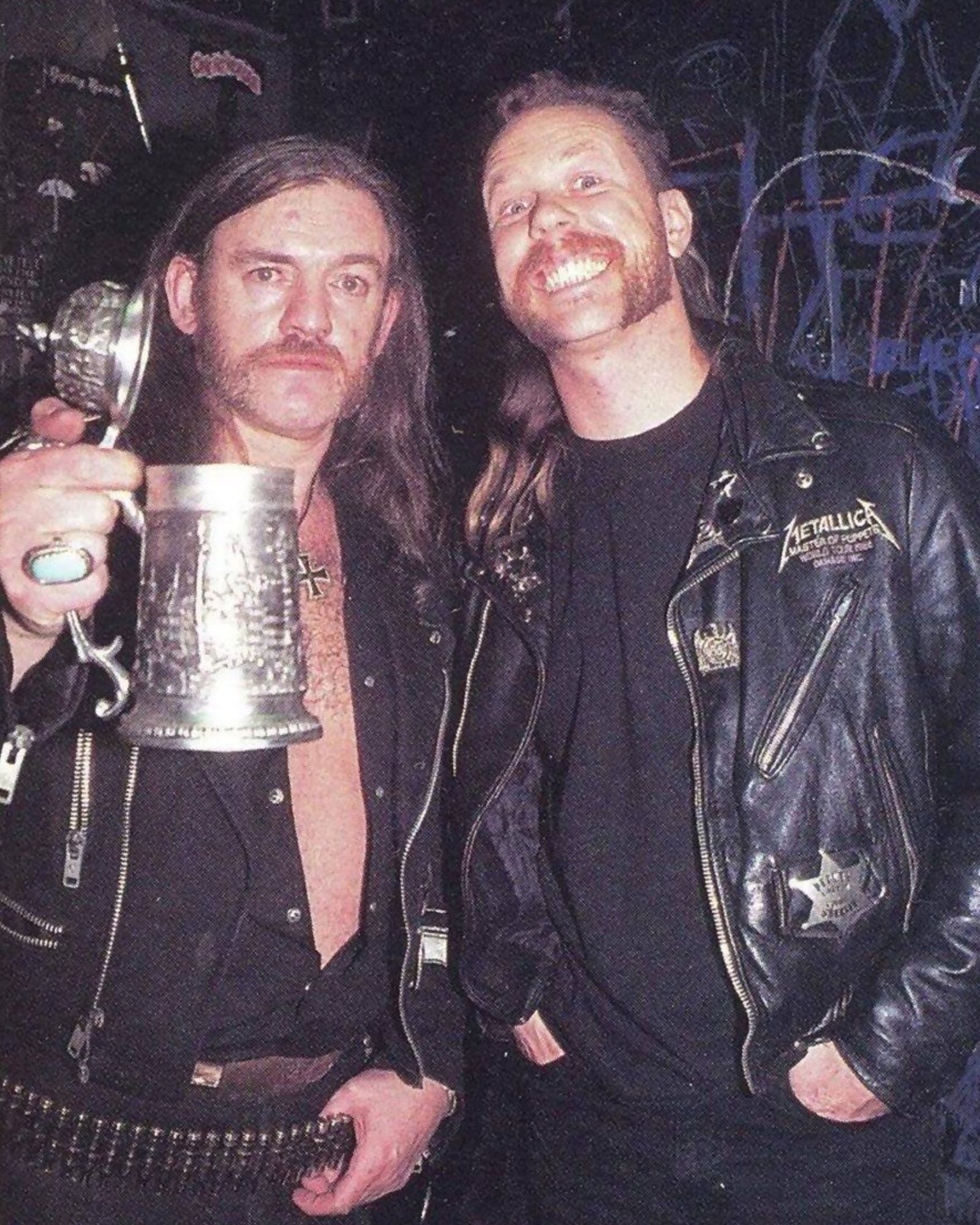
Rock stars get tattoos all the time. But in April 2024, Metallica’s James Hetfield revealed one that stopped fans in their tracks. The small black ace of spades on his middle finger was made with ink mixed with a pinch of the ashes of Lemmy Kilmister, the late leader of Motörhead. To understand why, you have to go back to the very beginning of Metallica.
The man behind the ace of spades
Ian “Lemmy” Kilmister was born on Christmas Eve 1945 in England. After playing bass in the space-rock band Hawkwind, he formed Motörhead in 1975, serving as its singer, bassist and main songwriter. With his gravelly voice, mutton-chop sideburns and bass held high like a rifle, he became one of the most recognizable figures in hard rock. In 1980, Motörhead released Ace of Spades, whose title track became the band’s signature song.
The fan who started Metallica
On the other side of the Atlantic, a Danish teenager named Lars Ulrich, who had moved to Southern California with his family, was obsessed with Motörhead. He helped run the band’s fan club in the early 1980s. Lemmy later joked that the club’s West Coast branch was probably just Lars and a friend.
In the summer of 1981, Lars followed Motörhead around on tour. That experience changed his life. As he later explained, it was what made him want to be in a band. When he got back to California, he called a young singer and guitarist named James Hetfield and told him they had to give it a real shot. In Lars’s words, Motörhead was the catalyst.
That partnership became Metallica, one of the biggest heavy metal bands in history.
From heroes to friends
As Metallica grew, the two bands became friends. Lars once estimated that the bands crossed paths 50 to 100 times over two decades. Whenever one was playing in the other’s town, they went to each other’s shows, and Lemmy joined Metallica onstage several times.
The most famous tribute came on December 14, 1995, when Motörhead celebrated Lemmy’s 50th birthday with a club show at the Whisky a Go Go on the Sunset Strip. The surprise opening act was a band called The Lemmys. It was Metallica, dressed up in wigs and fake moles and playing a set of Motörhead songs.
The admiration went both ways. Motörhead recorded a cover of Metallica’s “Whiplash” and won the Grammy for Best Metal Performance in 2005. Lemmy once said simply that you can’t top Metallica.
Losing an immortal
Lemmy’s health had been failing through 2015. On December 26, he was diagnosed with an aggressive form of cancer. He died two days later, on December 28, 2015, just four days after his 70th birthday.
Metallica were among the first to respond, writing that Lemmy was one of the primary reasons the band existed. At his funeral in Hollywood, Lars Ulrich and bassist Robert Trujillo were among the rock stars who paid tribute.
The next year, Metallica released “Murder One” on their album Hardwired… to Self-Destruct. The title was the name of Lemmy’s favorite amplifier, and the lyrics are woven from his song titles. Hetfield described what losing him felt like:
“To see your idol, your immortal one, actually be mortal.”
He said it hit the band hard. He also called Lemmy a kind of father figure who was unafraid, a true character, and always himself.
The tattoo
On April 18, 2024, Hetfield shared a photo of his new tattoo on Instagram. It is a black ace of spades drawn inside a cross, a nod to Motörhead’s most famous album and song. He explained that it was made with black ink mixed with a pinch of Lemmy’s cremation ashes, which he said had been graciously given to him.
Alongside the photo, he wrote that it was a salute to his friend and inspiration, and he summed up Lemmy’s place in his life in one line:
“Without him, there would be NO Metallica.”
He placed it on his middle finger for a reason that Lemmy surely would have loved. That way, Hetfield joked, Lemmy is still able to fly the bird at the world.
It is a strange and very rock-and-roll kind of tribute. But it also tells a simple story: a teenage fan follows his heroes on tour, starts a band of his own, becomes their friend, and decades later carries a little piece of one of them wherever he goes.