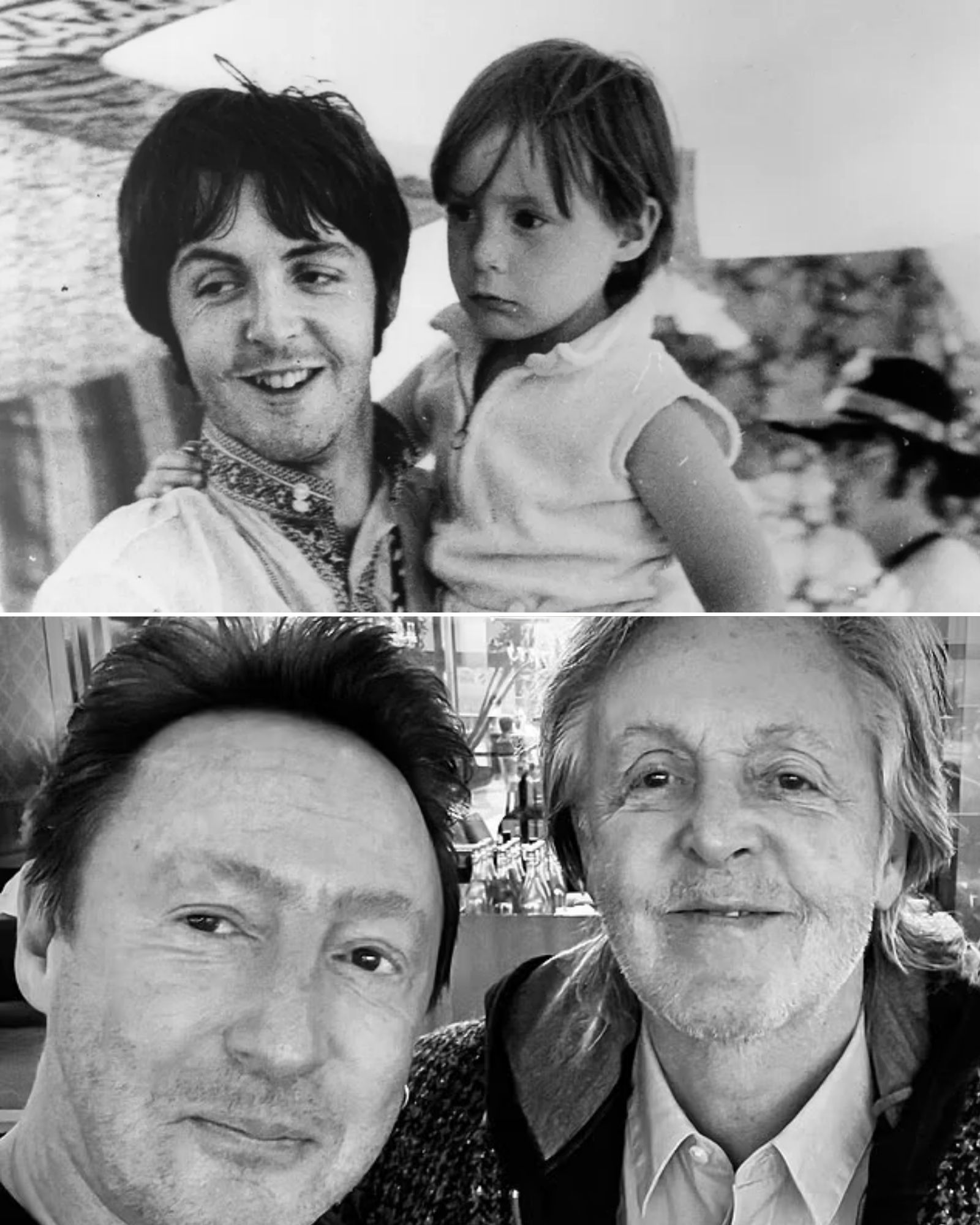
In 1968, Paul McCartney drove out to visit Cynthia Lennon and five-year-old Julian Lennon. John Lennon and Cynthia Lennon had separated, and a family Paul McCartney had known for years was facing a painful change.
During that drive, Paul McCartney began a song of encouragement for Julian Lennon.
Before the recording, the chart records, and the enormous singalongs, there was a friend making a visit—and thinking about the child caught in the middle.
A familiar journey with a different purpose
Paul McCartney knew the journey to the Lennon family home in Weybridge. Previous visits had often meant working on songs with John Lennon.
This time, Paul McCartney was going to see how Cynthia Lennon and Julian Lennon were doing.
Looking back, Paul McCartney explained that a change in John Lennon’s marriage did not erase an existing friendship with Cynthia Lennon. Paul McCartney had known Cynthia Lennon since the Liverpool years and had become a familiar, uncle-like presence in Julian Lennon’s life.
The visit gave that concern a practical form. Paul McCartney went to the house, spent time with Cynthia Lennon, and offered some company during an unsettled period.
In recollections of the afternoon, Cynthia Lennon remembered Paul McCartney arriving with a red rose and using humor to lift the mood. Cynthia Lennon also remembered the care behind the visit.
The first name belonged to the little boy
On the way there, Paul McCartney started shaping a melody around a message for Julian Lennon. The opening address was “Hey Jules,” using Paul McCartney’s familiar name for the child.
The intention was encouragement. Paul McCartney was thinking about how difficult a separation could be for a young child and wanted to offer some reassurance.
As the song developed, “Jules” became “Jude.” Paul McCartney preferred the sound of the new name, and the composition became “Hey Jude.”
That small change helped the song move beyond its first, very personal starting point. Listeners would hear an address to someone named Jude without needing to know anything about the Lennon family.
Years later, in McCartney: A Life in Lyrics, Paul McCartney described how a song could begin with a specific worry and gradually follow a broader path. Julian Lennon inspired the beginning, while the finished lyrics opened themselves to other situations and relationships.
A quiet beginning became an extraordinary record
The Beatles recorded “Hey Jude” that summer. The finished single began with Paul McCartney’s voice and piano, then gradually expanded into a performance whose long closing refrain became one of its most recognizable features.
Released in August 1968, “Hey Jude” was the first Beatles single on the group’s Apple label. At more than seven minutes, the recording was unusually long for a major pop single of the period.
American listeners embraced it. “Hey Jude” spent nine weeks at No. 1 in the United States, the longest stay at the top for any Beatles single.
The scale of that success can make the original circumstances easy to overlook. A record heard by millions had begun with Paul McCartney thinking about how to encourage one little boy.
The visit behind the familiar song
Knowing the story adds something to the record’s quiet opening. Behind the famous voice is a simple act of attention: Paul McCartney remembered Cynthia Lennon and Julian Lennon and made the journey to see them.
The song could grow into something much larger without losing that beginning.
For listeners who remember hearing “Hey Jude” on the radio in 1968, the ending may bring back a whole era. Its origin brings the story closer to home—a family changing, a child facing uncertainty, and a friend who wanted to offer encouragement.