In 1963, Connie Smith entered a talent contest at Frontier Ranch Park in Ohio and won five silver dollars. The prize was modest. The person who heard Connie Smith sing that day would help change the direction of an entire life.
Bill Anderson was appearing at the park. Connie Smith, a young mother living in Ohio, had come to see the country star perform. After winning the contest, Connie Smith earned a place on the evening show—and Bill Anderson noticed a voice worth hearing again.
The following year, Connie Smith recorded a Bill Anderson song called “Once a Day.” Released as Connie Smith’s first single, the record reached No. 1 and stayed there for eight weeks.
A voice that reached beyond Ohio
Connie Smith had grown up listening to country music and had begun singing at local events before the Frontier Ranch appearance. But singing close to home and beginning a recording career in Nashville were very different possibilities.
Bill Anderson helped make the second possibility real. After another shared show in Canton, Ohio, on New Year’s Day in 1964, Bill Anderson encouraged Connie Smith to visit Nashville. An appearance on the Ernest Tubb Record Shop’s Midnite Jamboree followed that March.
In May, Connie Smith returned to record demonstration versions of Bill Anderson songs. Those recordings helped persuade Chet Atkins to sign Connie Smith to RCA Records. Within months, a singer who had won five silver dollars was preparing to record with professional Nashville musicians.
“Scared to death” at RCA Studio B
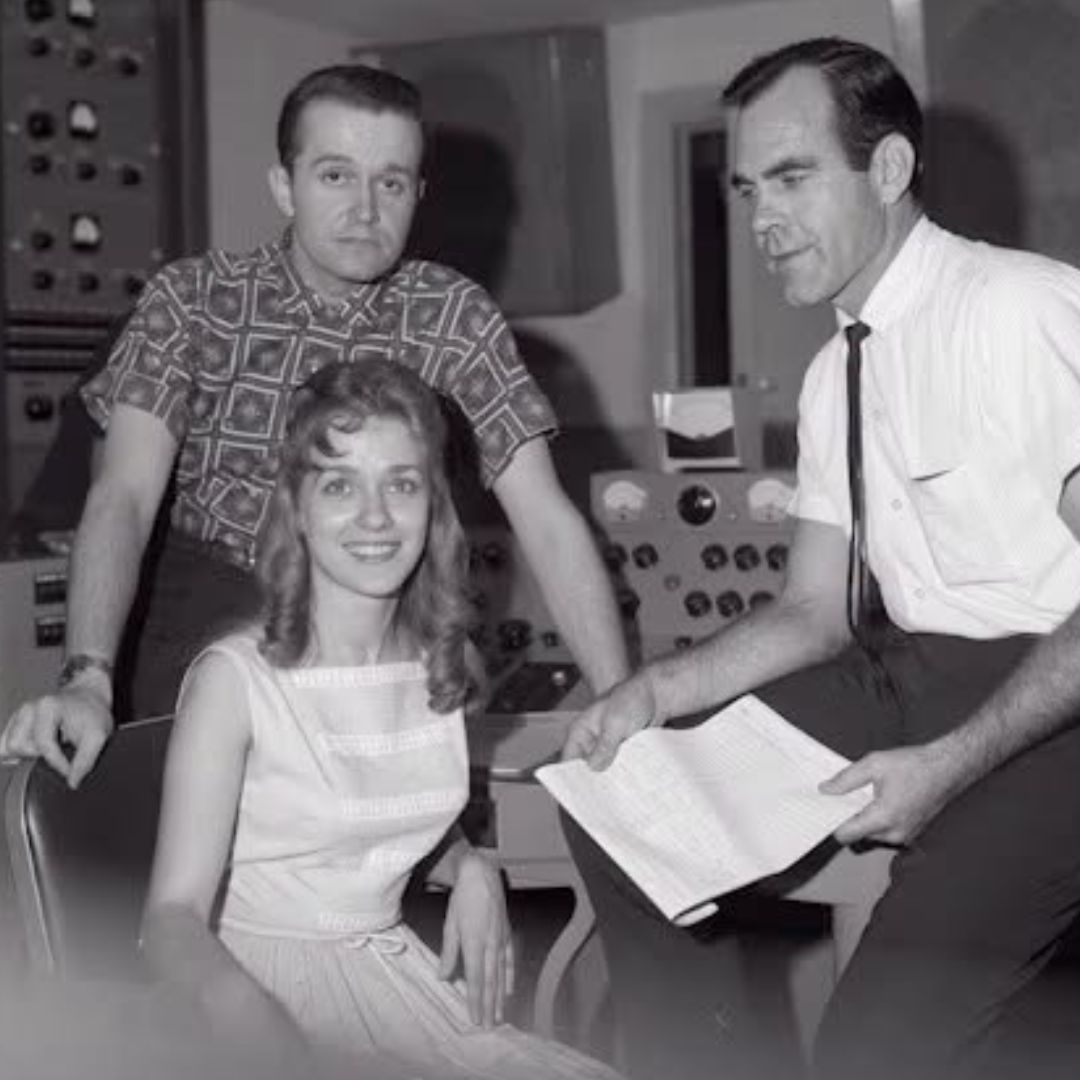
Connie Smith’s first RCA recording session took place on July 16, 1964, at Studio B in Nashville, with Bob Ferguson producing.
Asked about the experience years later by the Library of Congress, Connie Smith remembered being “scared to death.” Connie Smith sang behind a sound baffle with a window, able to see the musicians sharing the room. The setting was unfamiliar, and so were the people playing.
Among those musicians were steel guitarist Weldon Myrick and pianist Hargus “Pig” Robbins. Both became valued collaborators whose playing would accompany Connie Smith on many later recordings.
One of the songs chosen for that first session was already familiar. At an earlier show in Ohio, Bill Anderson and Betty Anderson had sung “Once a Day” for Connie Smith and asked whether Connie Smith liked it. The answer had been yes.
A small adjustment before a remarkable record
Before recording began, Bob Ferguson adjusted Weldon Myrick’s amplifier to bring out more treble. Connie Smith later explained that Bob Ferguson wanted a sharper steel guitar sound that would carry clearly through radio speakers.
It was a practical studio decision, but it became part of a distinctive recording. The steel guitar gave “Once a Day” an immediately recognizable character, while Connie Smith delivered the heartbreak with clarity and conviction.
The song’s central idea was simple and quietly devastating: what initially sounds like a limited amount of sorrow turns out to fill an entire day. Bill Anderson gave that thought a memorable shape. Connie Smith made the feeling believable.
By the end of the session, Connie Smith considered “Once a Day” the strongest recording of the day. Connie Smith did not yet know what qualified a song to become a hit, but felt certain that this recording deserved release as a single.
The first record went all the way
RCA released “Once a Day” in August 1964. By November, the record had reached the top of Billboard’s country chart. Connie Smith became the first female country artist whose debut single reached No. 1.
The record remained there for eight weeks, carrying its success into early 1965. Later in 1965, Connie Smith joined the Grand Ole Opry, another milestone in a career that had moved far beyond the Ohio talent contest.
Five silver dollars remain a wonderful detail because the beginning feels so approachable: a local contest, an opportunity to sing, and someone in the audience paying attention. Behind the famous recording was a nervous newcomer, a songwriter willing to help, and a first session that produced a country classic.