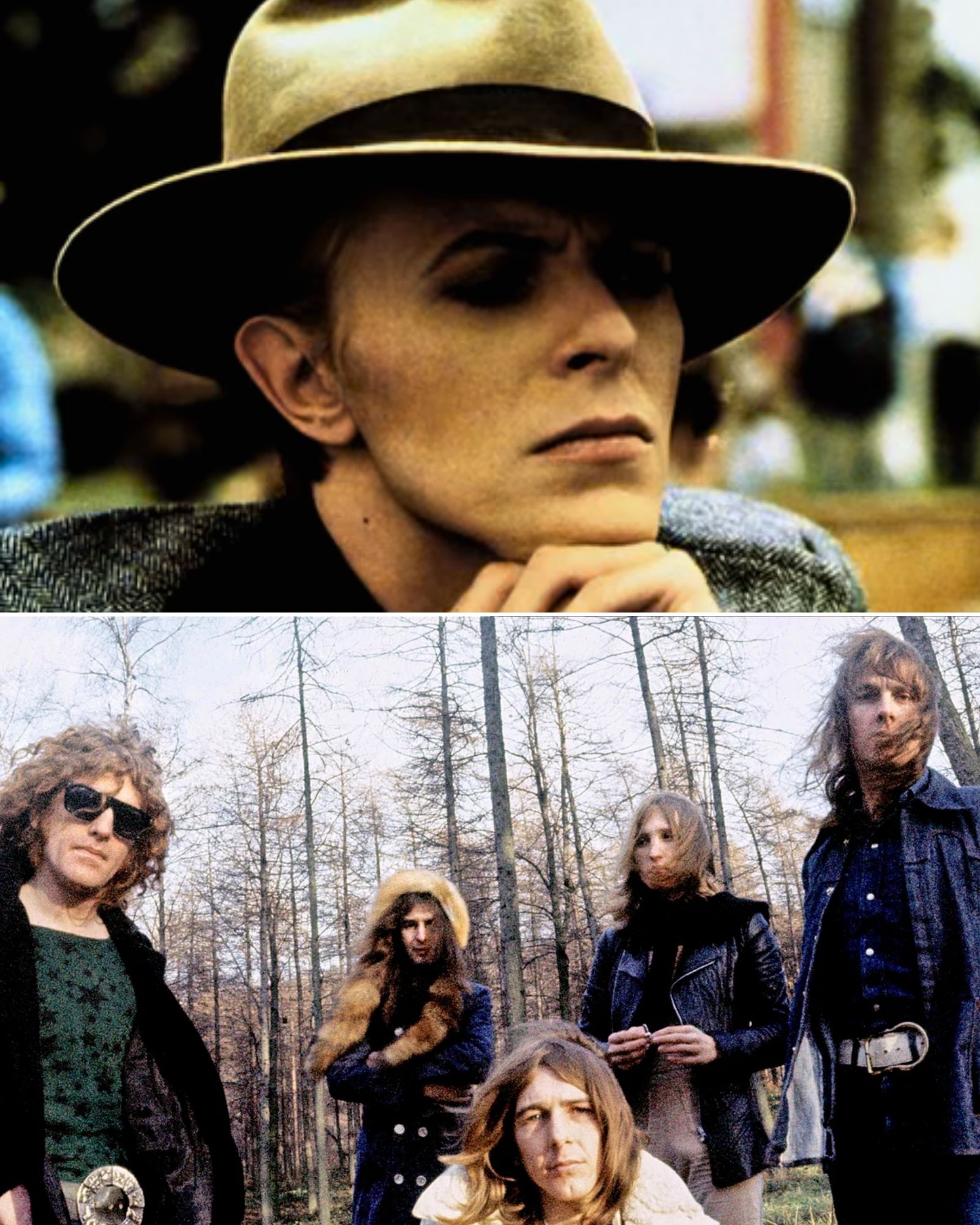
David Bowie wanted Mott the Hoople to keep going. Mott the Hoople had reached the point of giving up.
What followed was an unlikely turning point: a bass player looking for work, a rejected song, and David Bowie sitting on an office floor with an acoustic guitar. Within months, a band that had decided to split would have a hit near the top of the British charts.
The song was “All the Young Dudes.” But the story began before Mott the Hoople agreed to record it.
A Band That Could Draw a Crowd but Needed a Hit
By 1972, Mott the Hoople had built a following through live performances. In a 2024 interview with The Strange Brew, singer Ian Hunter remembered the band attracting audiences in cities including Newcastle and Birmingham.
Record success, however, had proved harder to achieve. Ian Hunter explained that a strong touring audience could only carry the band so far without chart success to sustain that momentum.
Eventually, Mott the Hoople split up in Switzerland. Back in Britain, bassist Pete Overend Watts began looking for another job.
That search led Pete Overend Watts to David Bowie. According to Ian Hunter, Pete Overend Watts had heard that David Bowie might need a bass player. Instead of finding a new position, Pete Overend Watts found someone unwilling to accept that Mott the Hoople was finished.
The Song Mott the Hoople Turned Down
David Bowie admired Mott the Hoople and wanted to help. Yet admiration did not mean that every song David Bowie offered would suit the band.
Mott the Hoople passed on “Suffragette City,” a song that would become part of David Bowie’s own celebrated catalog.
Looking back, that decision can seem extraordinary. A struggling band had declined material from David Bowie. But Mott the Hoople still needed a song that felt right for Mott the Hoople, rather than simply accepting a famous songwriter’s help.
David Bowie had another possibility: “All the Young Dudes.”
An Acoustic Guitar on an Office Floor
Ian Hunter remembered hearing the song in the Regent Street office of David Bowie’s manager, Tony Defries. David Bowie sat on the floor and played it on an acoustic guitar.
There was no finished Mott the Hoople recording to judge yet. The band heard the composition in a simple form and recognized something worth pursuing.
Ian Hunter later pushed back against the familiar version of the story in which David Bowie supposedly wrote the song overnight specifically to rescue Mott the Hoople. In Ian Hunter’s account, David Bowie already had the song.
That distinction makes the story more precise without diminishing the generosity. David Bowie offered a strong composition at a moment when Mott the Hoople badly needed a reason to continue.
Mott the Hoople Made the Song Its Own
David Bowie’s contribution did not end with the introduction. David Bowie produced the recording and the album that followed.
Mott the Hoople also brought essential ideas to the arrangement. Ian Hunter recalled moving the song from the key of C to D for greater power. Guitarist Mick Ralphs contributed the memorable introduction, while organist Verden Allen helped shape the sound.
The result was a collaboration with a clear identity. David Bowie supplied the song, but Mott the Hoople supplied the performance that listeners came to know.
“All the Young Dudes” entered the UK singles chart in August 1972. On the chart dated September 9, the single reached No. 3.
A Second Chance That Lasted Beyond One Single
The breakthrough also created a challenge: Mott the Hoople needed to demonstrate that success could continue beyond a David Bowie composition.
Further singles, including “Honaloochie Boogie” and “All the Way from Memphis,” helped establish that Mott the Hoople had more to offer.
Still, “All the Young Dudes” remained the defining turning point. Pete Overend Watts had contacted David Bowie while searching for work after a breakup. That conversation helped bring Mott the Hoople back together—and gave the band a song that audiences would remember for decades.