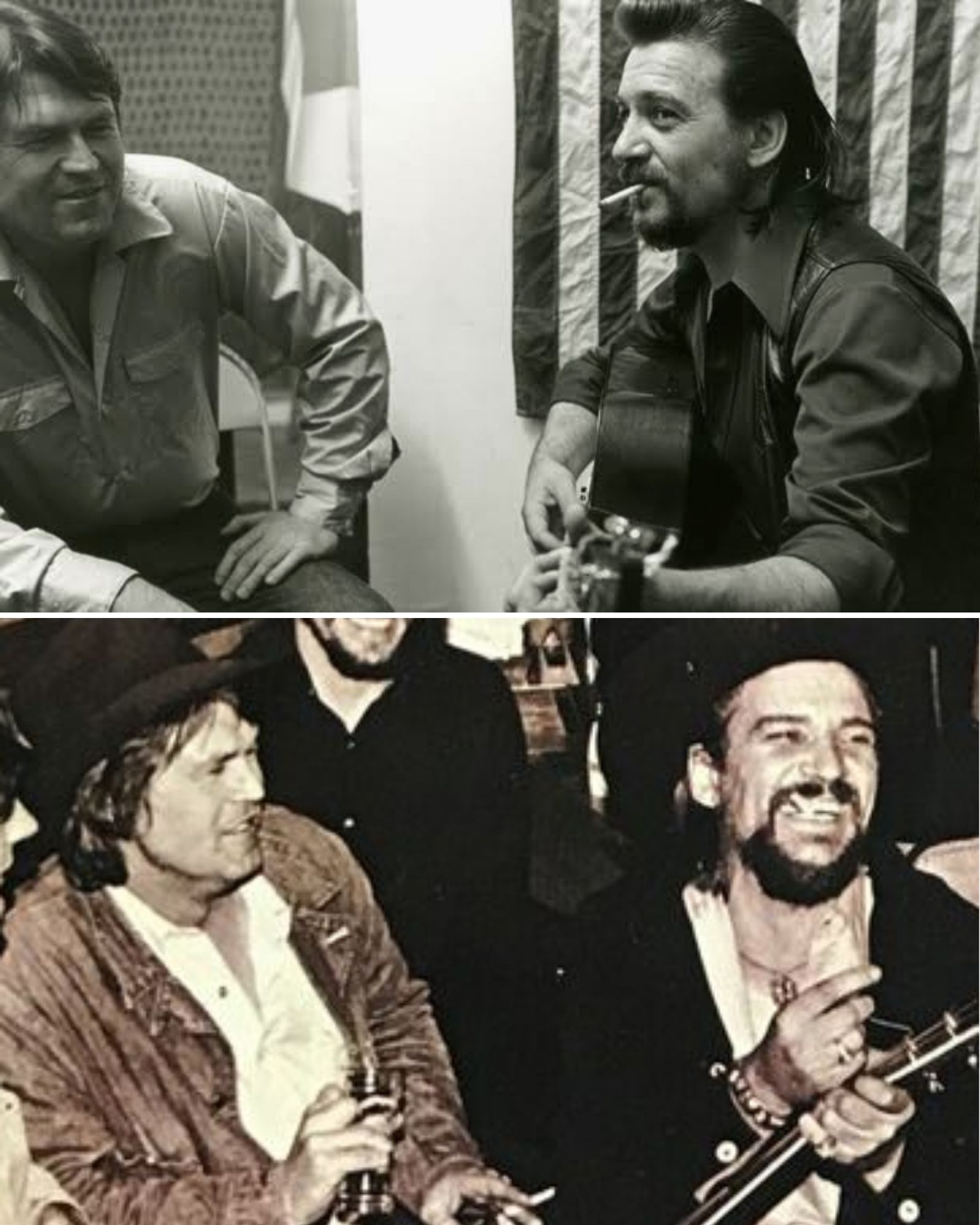
Waylon Jennings agreed to listen to one song. If the song wasn’t good enough, Billy Joe Shaver would have to leave. That was the condition.
For a songwriter who had spent months trying to get an audience with Waylon Jennings, the opportunity was worth taking. One song became another, and then another. By the end, Waylon Jennings wanted to make an album of Billy Joe Shaver’s songs.
The result was Honky Tonk Heroes, released in 1973. Nine of the original album’s ten tracks were written or co-written by Billy Joe Shaver. A reluctant listening session had helped bring together a singer and songwriter whose work would become central to outlaw country.
A promise taken seriously
The story began after Waylon Jennings heard Billy Joe Shaver perform in Texas. Impressed by the songwriting, Waylon Jennings talked about recording an entire album of the material.
Billy Joe Shaver took the offer seriously. Getting Waylon Jennings to follow through, however, required persistence. Months passed as Billy Joe Shaver kept trying to get the songs heard.
The eventual agreement to hear one song gave the meeting a simple test: the music would have to justify another listen.
That was where Billy Joe Shaver’s writing proved its strength. The songs drew on hard experience, ordinary speech, disappointment, restless travel, and the effort to keep going. Waylon Jennings found enough in that collection to commit most of an album to one songwriter.
Getting into the studio brought another disagreement
Agreeing to record the songs did not settle how the songs should sound.
Waylon Jennings had fought for greater control over recording decisions. With drummer and close collaborator Richie Albright, Waylon Jennings was developing arrangements that gave country material a stronger rhythmic drive.
During work on the title track, Billy Joe Shaver objected to the approach. According to Richie Albright’s recollection, Billy Joe Shaver heard the changes and protested that the song was being altered incorrectly. Waylon Jennings and Billy Joe Shaver began arguing.
The disagreement concerned something listeners can still hear. “Honky Tonk Heroes” begins with a relatively restrained country feel before moving into a more forceful electric passage. The arrangement later settles into a slower, half-time feel.
Billy Joe Shaver initially resisted hearing a familiar composition reshaped that way. Richie Albright recalled that, once the pieces were put together, Billy Joe Shaver approved the result.
That studio exchange gives the album’s origin more depth. Billy Joe Shaver had insisted on being heard, and Waylon Jennings had become convinced enough by the songs to give the performances a distinct musical identity.
The right voice for the songs
The partnership worked because Billy Joe Shaver recognized what Waylon Jennings could bring to the material.
“The songs were so big, they were too big for me.”
Billy Joe Shaver explained that Waylon Jennings could communicate the songs in a way Billy Joe Shaver could not. That was a remarkable acknowledgment from a songwriter who had defended the material so fiercely.
Honky Tonk Heroes became one of the defining albums of the outlaw era. The record also gave Billy Joe Shaver’s songwriting a lasting place in the story of country music.
The beginning remained wonderfully small: a promise, months of persistence, and permission to play one song. Waylon Jennings kept listening. By the time the album was finished, only one of its ten tracks came from outside Billy Joe Shaver’s songwriting.