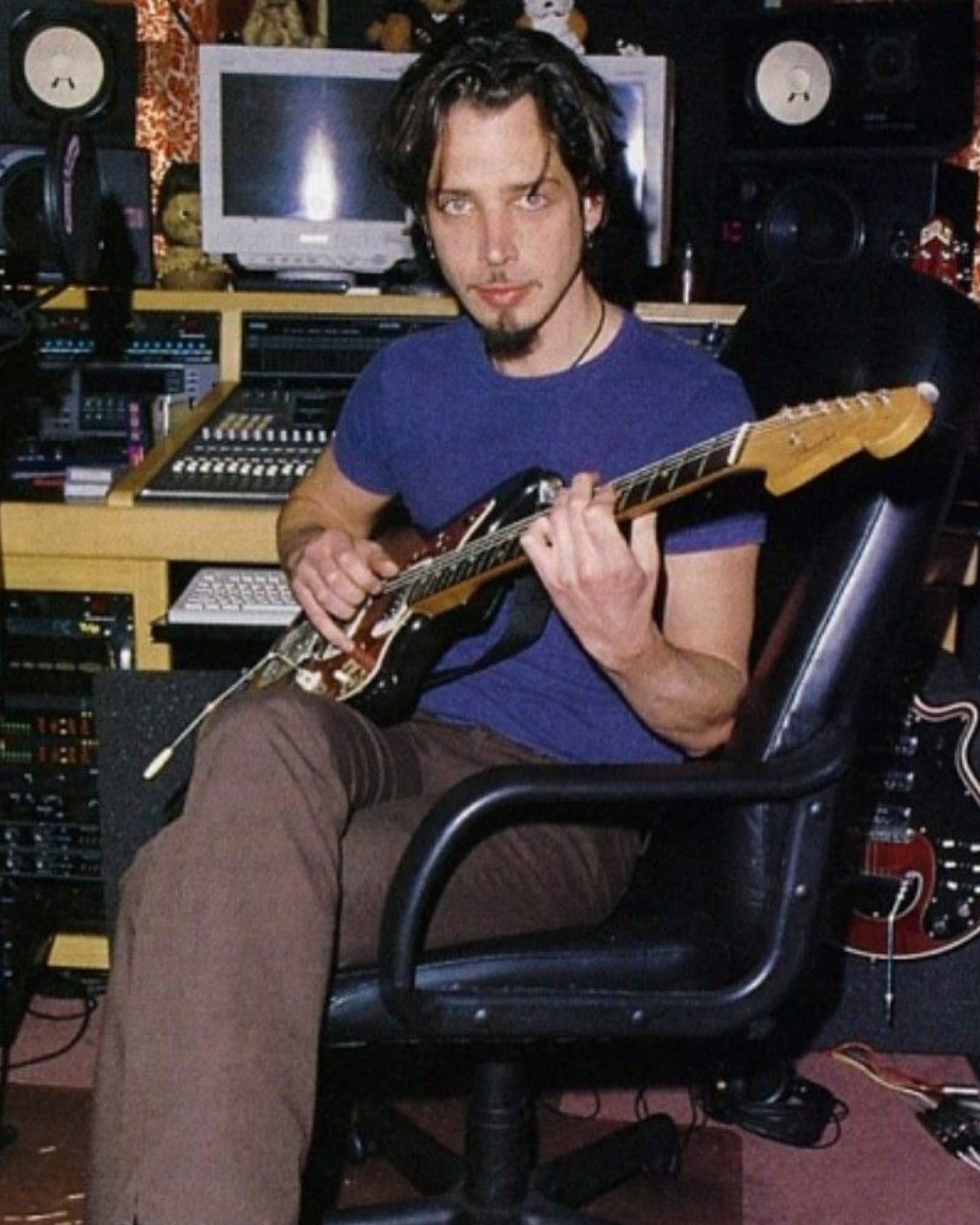
Some songs begin with a broken heart or a long night on the road. Chris Cornell’s most famous song began with a mistake. While watching the news, the Soundgarden singer thought he heard the anchor say the words “black hole sun.” The anchor had said something else entirely. That misheard phrase became “Black Hole Sun,” the song that turned Soundgarden from a respected Seattle band into a household name in the summer of 1994.
The Words He Was Told He Got Wrong
Cornell told the story to Entertainment Weekly years later. He had heard the phrase, someone corrected him, and he realized the anchor had never said it. Most people would have laughed and moved on. Cornell couldn’t let it go. The words had already put a picture in his head, and he thought they would make an amazing song title.
“He didn’t say it, but I heard it.”
That one sentence explains the whole song. It did not come from a story he wanted to tell. It came from an image that would not leave him alone.
A Melody Built on a Late Drive Home
At the time, Soundgarden was working toward their fourth album, Superunknown. Cornell later told Uncut magazine that the song took shape in his head while he drove home from Bear Creek Studio in Woodinville, Washington, a drive of roughly 35 to 40 minutes from Seattle. By his account, nearly the whole arrangement came to him on that drive, even the guitar part that runs beneath the main riff.
He had no way to record it in the car, so he kept turning the melodies over in his mind so they would not slip away. When he got home, he whistled the tune into a Dictaphone. The next day he sat down with it, added a couple of key changes in the verses to make the melody more interesting, and then wrote the lyrics. He described the words as a stream of consciousness, built on the feeling the title and chorus gave him. He later estimated that he wrote the song in about 15 minutes.
Why Cornell Expected His Band to Pass on It
The finished song did not sound like the Soundgarden fans knew. It was slower, prettier, and closer to the Beatles than to the heavy, grinding records the band had built its name on. Cornell genuinely worried his bandmates would like the song but not think of it as a Soundgarden song. He admitted he was not sure himself.
Their reactions were mixed. Guitarist Kim Thayil later said it had more of a pop construction than the guitar-driven songs they were used to. The band could hear that it might be a big hit, and that made them uneasy. If it became huge, would they be expected to play it everywhere they went? Bassist Ben Shepherd felt differently.
“I knew immediately it was a heavy-hitting song.” — Ben Shepherd
To keep the song tied to who they were, the band leaned into its darker side. Thayil’s guitar solo gave him room to play something wild and noisy, pulling the track back toward the strange, psychedelic edge that Soundgarden fans expected.
The Producer Who Played It 15 Times in a Row
No one was more certain than producer Michael Beinhorn. When he first heard the song, he said it felt like being hit by a bus. Usually, he explained, a listener’s attention drifts at some point in a piece of music. This time it never did.
“I played it 15 times in a row. I told Chris he was a genius.”
Even so, the record company did not lead with it. “Black Hole Sun” was the seventh track on Superunknown and only the third single, after “Spoonman” and “The Day I Tried to Live.”
A Summer Hit Built on a Sad Song
Once it reached radio in May 1994, it took over. “Black Hole Sun” spent seven weeks at No. 1 on Billboard’s Mainstream Rock chart and became the top modern rock song of the year. Its video, directed by Howard Greenhalgh, showed a sunny suburban neighborhood full of people with stretched, grinning faces, all swallowed up when the sun turns into a black hole. It won Best Metal/Hard Rock Video at the 1994 MTV Video Music Awards. A few months later, at the 1995 Grammy Awards, the song won Best Hard Rock Performance.
The timing gave the song a meaning Cornell never intended. Superunknown came out in March 1994, and Nirvana’s Kurt Cobain died weeks later. Beinhorn remembered that some listeners believed “Black Hole Sun” was about Cobain. It was not. Cornell had written it before any of that happened.
What frustrated Cornell more was how many people heard it as a cheerful song, simply because the melody was so pretty.
“No one seems to get this, but ‘Black Hole Sun’ is sad.”
He also admitted he could not explain exactly what it was about. He called it a surreal dreamscape, a song where he was painting a picture rather than making a point. Maybe that is why it has lasted. Cornell died in 2017, but the song he built from three misheard words is still played on rock radio more than 30 years later, and listeners are still bringing their own memories to it.
Do you remember where you were the first time you heard it on the radio?