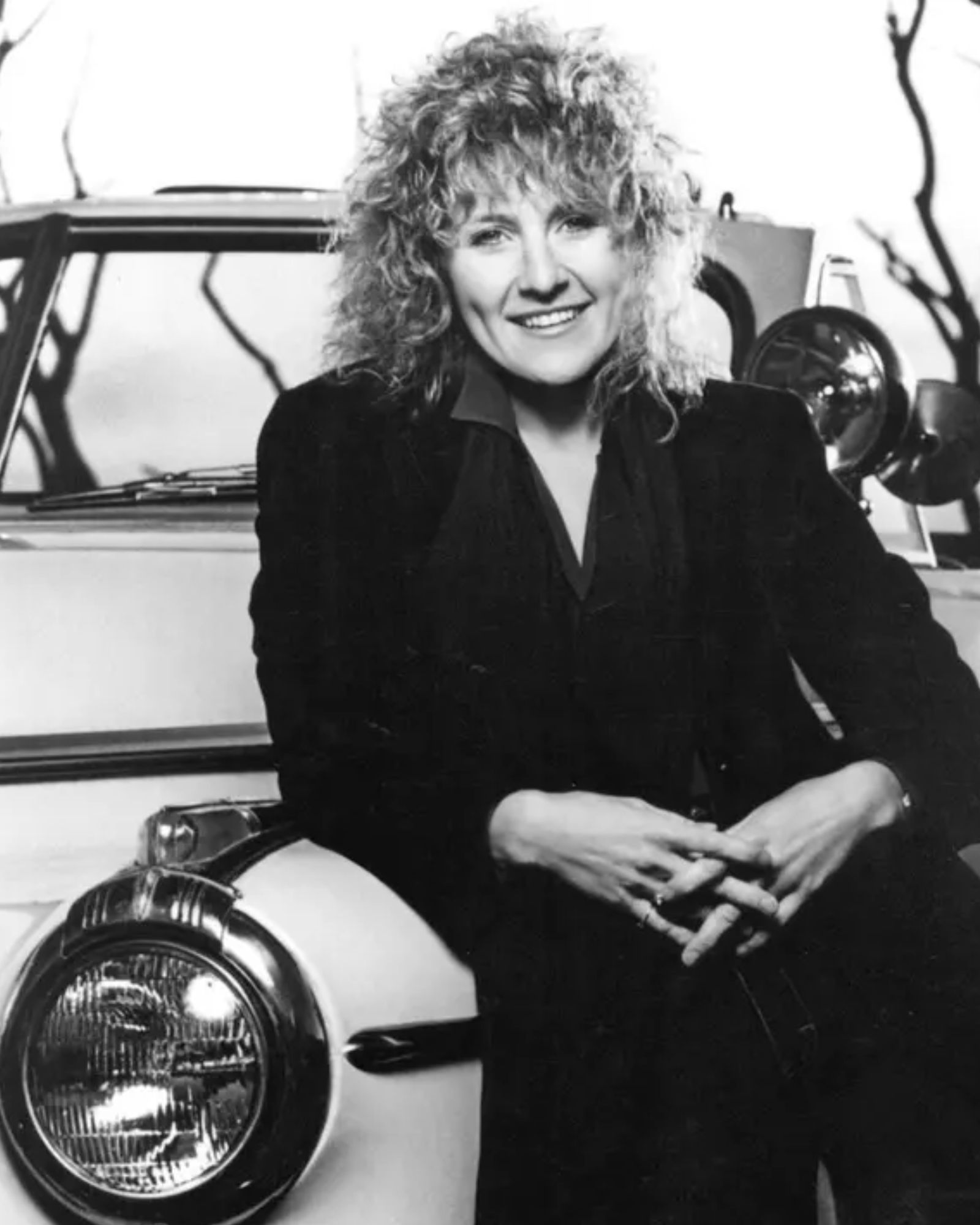
Some country songs take months of rewrites in a Nashville office. Lacy J. Dalton’s first hit started with a pot of coffee, a sleepy friend and a broom handle banging on the bottom of a loft.
The song was “Crazy Blue Eyes.” Lacy wrote it with Mary McFadden, the friend she had known since they were both 7 years old. Once record companies heard it, almost every major label wanted to sign her. Even Mick Jagger made an offer.
A Cabin, a Pot of Coffee and a Friend in the Loft
It was 1978. Lacy was living in a small cabin on Alba Road in Ben Lomond, up in the Santa Cruz mountains of California. She was not famous yet. She was not even called Lacy J. Dalton yet. She had made one record for a small independent label under her married name, Jill Croston, and had spent years waiting tables and singing wherever she could.
Mary McFadden was staying with her at the time and sleeping in the cabin’s loft. Mary was going through a hard stretch of her own, getting over a divorce.
One morning Lacy went downstairs, put on a pot of coffee and started working on a new song. Part of the way in, she realized who should be helping her write it.
“Mary, Get Up!”
Lacy didn’t climb the ladder. She grabbed a broom, turned it around and pounded the handle on the underside of the loft. When Mary stirred, Lacy called up to her:
“You’re in the perfect mood to write this song with me.”
She wasn’t wrong. A woman coming out of a broken marriage knew exactly how this song should feel. The two friends sat down together, and by Lacy’s telling they had the song finished in about fifteen minutes. They didn’t even call it “Crazy Blue Eyes” at first. The working title was “Letter to Mamma.”
A Song Nashville Didn’t Expect From a Woman
The finished song is written like a daughter talking to her mother. She admits she keeps choosing wild, restless men who will never settle down. She knows it’s a gamble, and she asks her mother not to feel sorry for her. But she also makes it clear she could never stay with a man who tried to own her.
In 1978 that was not the kind of thing women usually sang on country radio. The era’s best-known message for women was to stand by your man. Lacy has said the song’s independent attitude was exactly why it caught Nashville’s ear.
Not everyone was comfortable with it at first. Billy Sherrill, the producer behind George Jones and Tammy Wynette, was a straight-laced Baptist, and he asked whether it bothered her how some listeners might judge a woman singing those lines. Lacy told him that if she thought what she was doing was wrong, she wouldn’t do it. She later said that song was what started her off as an outlaw artist.
The Race to Sign Her
On the strength of that one song, offers came in from almost every major label. One came from Mick Jagger, which still surprises people when Lacy tells the story.
Billy Sherrill and his partner Al Gallico moved fastest. In June 1979 they signed her to CBS Records, and she took a new name: Lacy J. Dalton. Looking back, she has said she was grateful Sherrill was her first producer, because he believed in me more than I believed in myself.
Two Names on the Label
“Crazy Blue Eyes” became Lacy J. Dalton’s first single in the fall of 1979. It climbed the Billboard country chart into the Top 20 and launched a career that would include “Takin’ It Easy,” “16th Avenue” and “Black Coffee.”
On every copy of that first single, two writers are credited: Lacy J. Dalton and Mary McFadden. A woman who had been sound asleep in a loft that morning ended up co-writing the song that opened the door for her lifelong friend.
Decades later, Lacy still tells the story the same way: the coffee, the broom handle and the friend upstairs who was in exactly the right frame of mind.
Do you remember the first time you heard “Crazy Blue Eyes” on the radio? Tell us where you were.