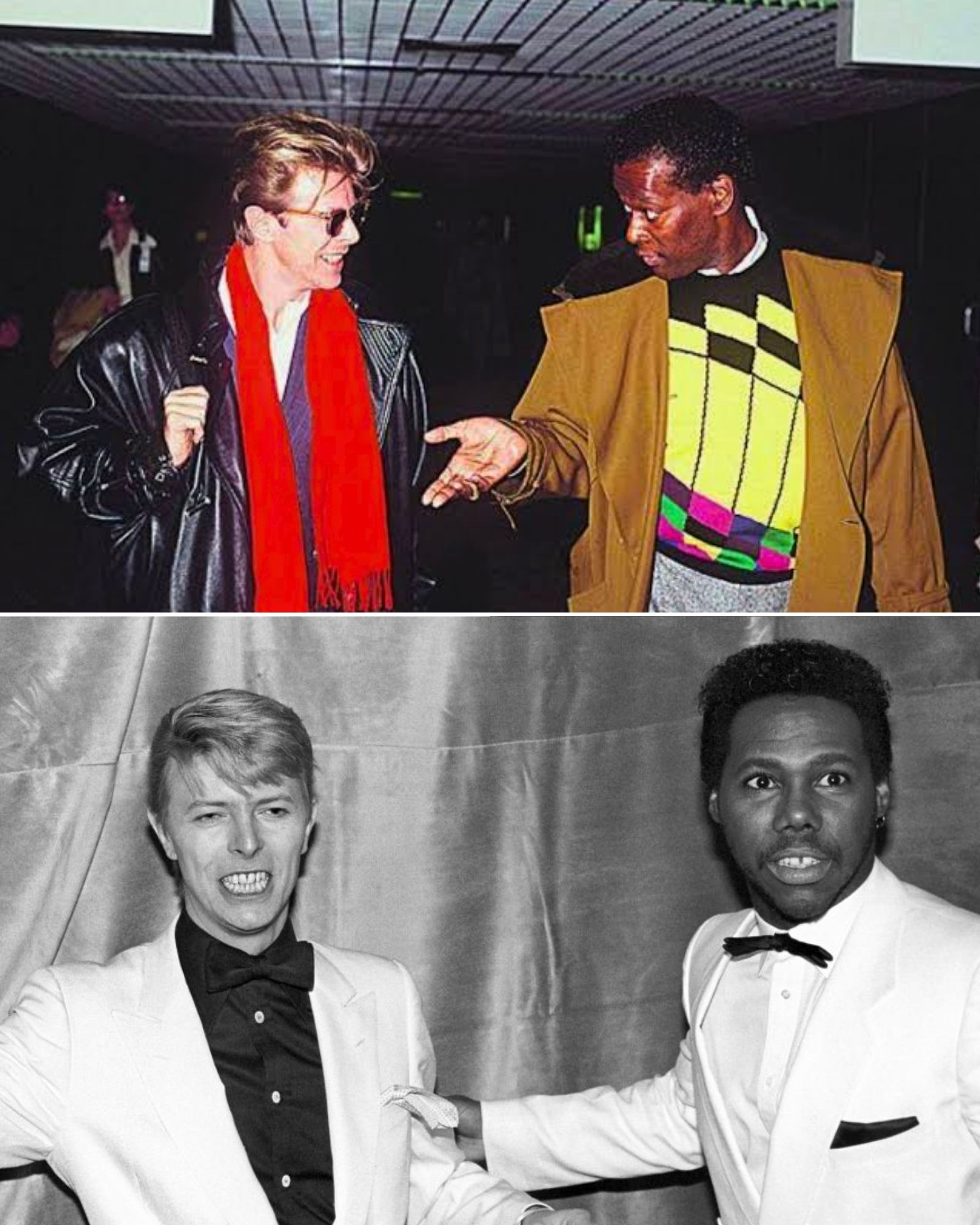
In the summer of 1974, Luther Vandross was a talented backup singer few people outside New York had ever heard of. He was 23 years old. By the end of that year, he was on tour with David Bowie, his ideas were all over one of Bowie’s most important albums, and the career that would make him one of the great voices in R&B had quietly begun.
It started with a friendly visit and a couch.
An invitation from an old friend
Luther grew up in New York, and at William Howard Taft High School he sang in a vocal group with friends that included Carlos Alomar and Robin Clark. Years later, Carlos had become a sought-after guitarist, and he had married Robin.
In 1974, Carlos landed a big job. David Bowie, then known for glam rock and his Ziggy Stardust years, wanted to make an album steeped in American soul and funk. He booked time at Sigma Sound Studios in Philadelphia, the room where Gamble and Huff had created the famous Philly soul sound. Carlos was his guitarist.
The sessions began in mid-August. On the second day, Carlos brought along two guests from New York: his wife Robin and his old friend Luther. They were not hired. They were just there to hang out.
Singing on the couch
Luther and Robin sat on a couch in the control room, listening to a track Bowie was working on called “Young Americans.” Luther could not help himself. He heard space behind Bowie’s lead vocal and had an idea for the chorus: a short, gospel-style answering phrase. He told Robin to sing it with him, then jump up into harmony on the final words.
The two of them started singing it softly as the track played. Their voices caught Bowie’s attention. Curious, and a little puzzled, he turned and asked Luther who he was.
Luther was mortified. He apologized for interrupting. Bowie put him at ease and asked him to do it again.
Carlos Alomar later joked that Bowie made a mistake asking that, because once Luther got started, background vocal ideas came pouring out of him one after another.
From visitor to vocal arranger
By the end of the sessions, Luther was no longer a guest. He sang backing vocals, worked out the vocal arrangements, and drilled the other singers. A rehearsal tape from those sessions, preserved in the old Sigma Sound archive, catches him running the backup singers like a drill sergeant.
He even helped write a song. Luther had his own tune called “Funky Music (Is a Part of Me).” Bowie liked it so much that, with Luther’s agreement, he rewrote the lyrics and reshaped it into “Fascination,” which landed on the album with Luther credited as co-writer. Luther later released his original version on his 1976 debut album with the group Luther.
Young Americans came out in March 1975. It gave Bowie a whole new sound in America, and it included “Fame,” his first No. 1 hit in the United States.
On the road for the first time
When Bowie went back on tour in the fall of 1974, a leg that fans came to call the “Philly Dogs” tour, he took Luther with him, as both a backup singer and the opening act. For Luther, it was the first time he had ever traveled outside New York City.
The connections kept coming. Through Bowie, Luther met Bette Midler, who hired him to arrange vocals for her Broadway show. She introduced him to producer Arif Mardin, and soon Luther had steady work as one of the most in-demand background singers and arrangers in the business. His solo career took off in 1981 with “Never Too Much,” and the rest is history.
Luther never forgot who opened that first door.
“David Bowie started [my career]. Absolutely.”
The two stayed friends until Luther died in 2005, at just 54. And it all started because a young singer on a couch couldn’t keep a good idea to himself.
Did you know Luther Vandross was singing behind David Bowie before he ever had a hit of his own?