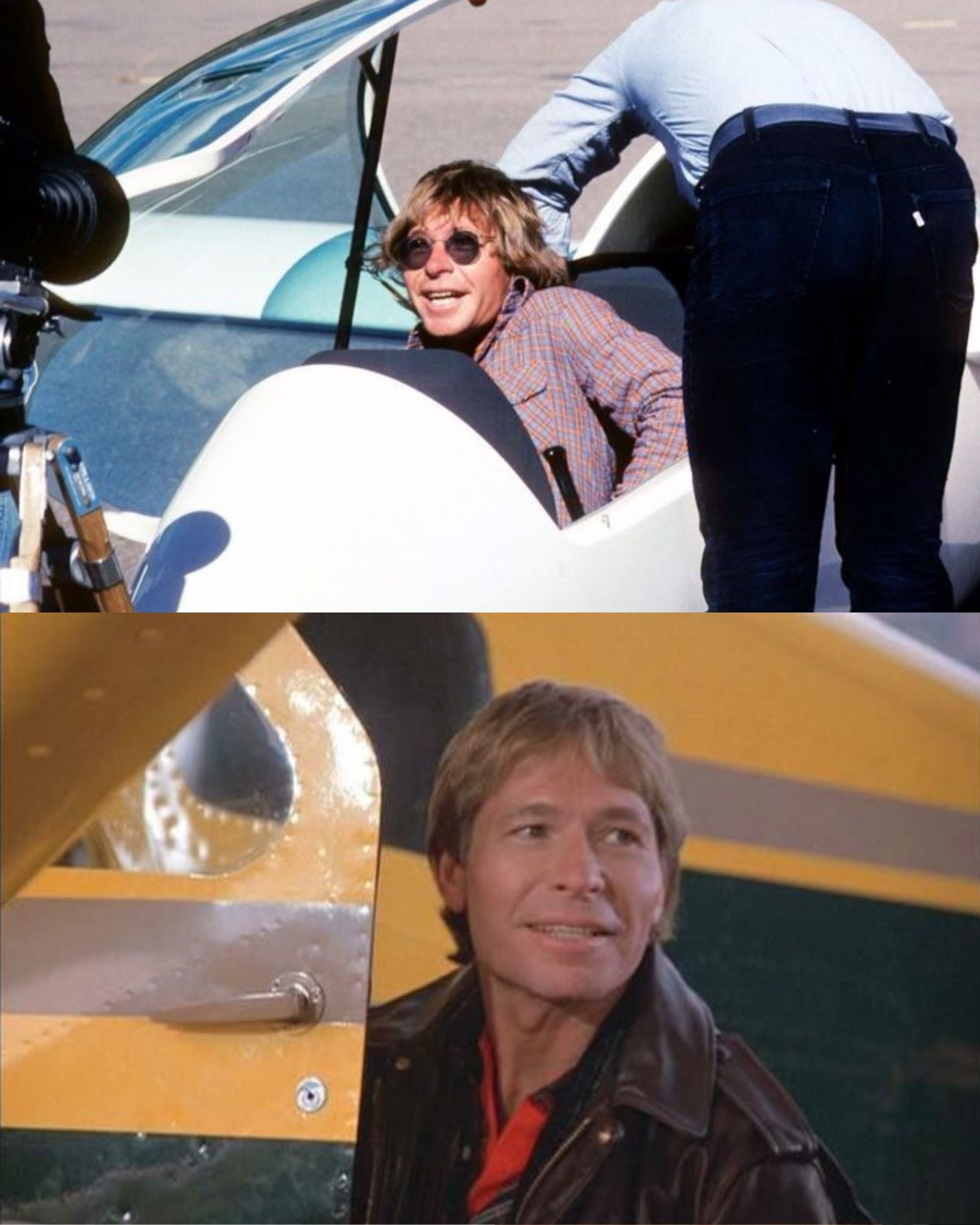
In the fall of 1997, John Denver had a new airplane and a small problem with it. The handle he needed to switch fuel tanks sat behind his left shoulder, where he could not reach it from the pilot’s seat. He knew it. His mechanic knew it. Plans had already been made to move it while he was away on tour.
On the afternoon of October 12, 1997, before that fix could happen, John Denver took the plane up over Monterey Bay. One of the last things in the cockpit with him was a small inspection mirror a mechanic had handed him so he could check the fuel gauges behind his head. Investigators later recovered it from the wreckage.
A Pilot Like His Father
Flying ran in the family. John Denver was born Henry John Deutschendorf Jr., the son of Henry John “Dutch” Deutschendorf, a decorated Air Force pilot. In January 1961, Dutch Deutschendorf and his crew flew a Convair B-58 Hustler bomber to six world speed records, averaging more than 1,000 miles per hour.
His son grew up to be a serious pilot in his own right. According to the National Transportation Safety Board, John Denver held a private pilot certificate with ratings for single- and multi-engine airplanes, seaplanes and gliders, plus an instrument rating and a Learjet type rating. On his last medical application, in 1996, he reported about 2,750 hours of flight time.
The New Plane
On September 27, 1997, John Denver bought a Long-EZ, a small, homebuilt, experimental aircraft with its engine in the back and a little wing up front. This particular plane had been changed by its original builder. The design called for the fuel selector to sit between the pilot’s legs. The builder did not like fuel lines in the cockpit, so he moved the handle to the rear bulkhead, behind the pilot’s left shoulder. It carried no markings to show which tank was selected, and the fuel gauges were unmarked sight tubes behind the pilot.
On October 11, the day before the crash, another Long-EZ pilot gave Denver a half-hour ground and flight checkout in Santa Maria, California. Denver then flew the plane to Monterey.
The Afternoon in Monterey
On October 12, John Denver called to have the plane readied. A maintenance technician helped him move it out of the hangar and noticed he took his time with his preflight inspection. The two of them talked about the fuel selector. It was not only in an awkward spot, it was also hard to turn.
They tried to extend the handle with a pair of vise grip pliers. It did not solve the problem. Denver still could not reach it while seated. He said that if he needed to switch tanks in flight, he would use the autopilot to hold the plane level while he turned the handle. The technician gave him an inspection mirror so he could see the fuel gauges behind him.
Denver declined to have the plane refueled. He took off at 5:12 p.m. He flew three touch-and-go landings, then left the airport traffic pattern at about 5:27 p.m. There was no further radio contact.
What the Witnesses Saw
About twenty people watched what happened next. The plane was flying along the coast near Pacific Grove, a few hundred feet up. Eight witnesses said they heard a pop or a backfire and then the engine noise dropped. The Long-EZ rolled into a steep right bank and spiraled into the water about 150 yards offshore.
John Denver was killed. He was 53 years old. The wreckage was recovered from about 30 feet of water. Investigators found nothing wrong with the engine or the flight controls.
What the Investigators Found
Fuel starvation appeared to be why the engine stopped. When Denver left Santa Maria, the selector was on the right tank, which held about 12.5 gallons. Between the trip to Monterey and the final flight, that tank was most likely empty, even though fuel remained in the other one.
Other pilots who had flown this plane described what it took to switch tanks: take your hand off the control stick, release your shoulder harness, twist your body 90 degrees to the left, then turn the handle. Two of them said they had once run a tank dry in it and nearly crashed. When an investigator tried the same motion, he found himself naturally pushing on the right rudder pedal. In this design, only a tiny movement could start a strong roll and spiral.
The NTSB concluded that the probable cause was John Denver’s attention being diverted from flying the plane, and his unintended right rudder input, which led to a loss of control while he tried to work the fuel selector. The board also cited his decision not to refuel. It named as factors the builder’s placement of the unmarked handle, the unmarked fuel gauges, his limited transition training, and his lack of experience in this type of airplane.
Home to the Mountains
John Denver spent his life singing about wide skies and high country. After his death, his ashes were scattered in the Colorado Rocky Mountains, the place his music had made famous around the world.
Where were you when you heard the news about John Denver? Share your memories with us below.