Scroll to the end of the article to hear the song.
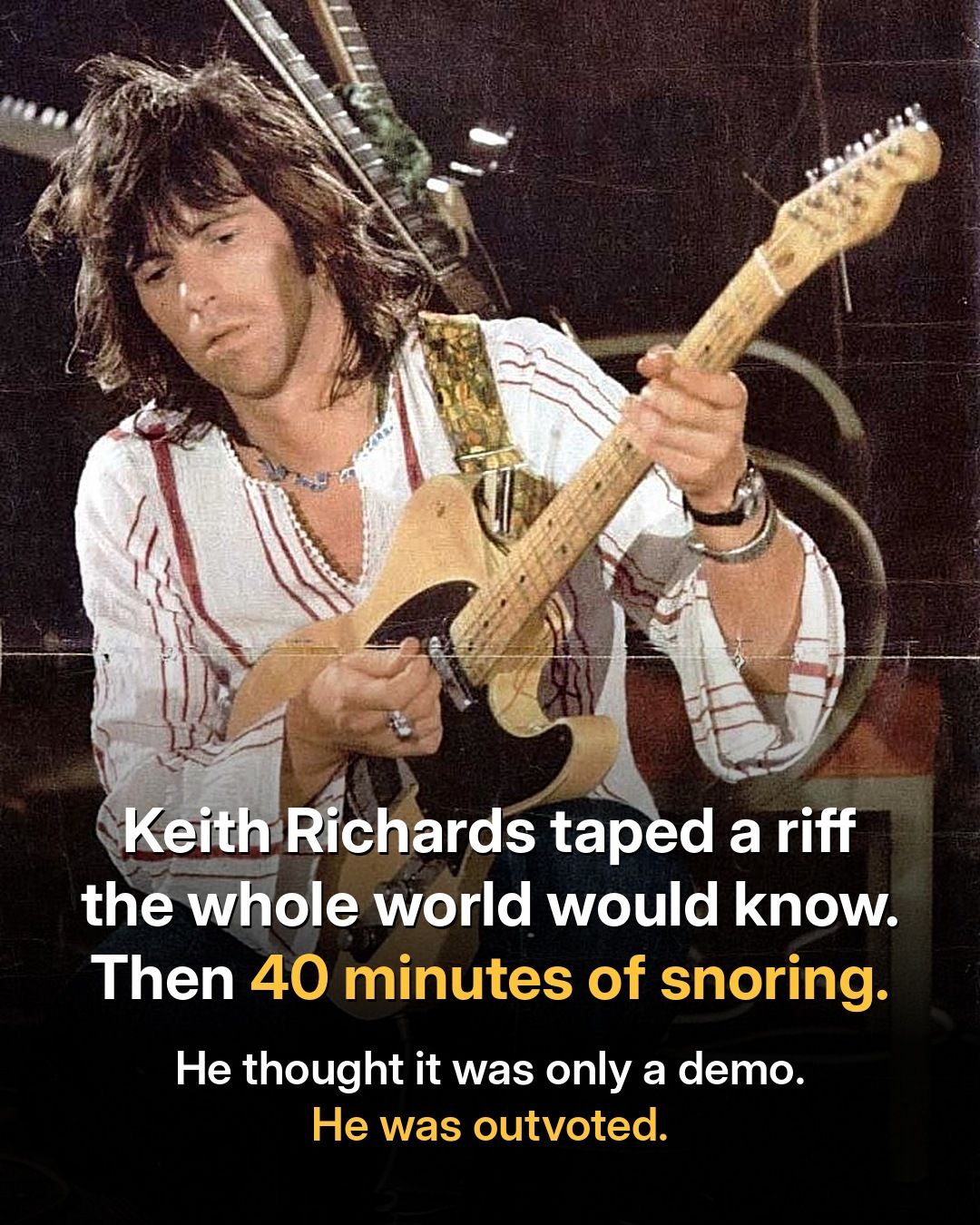
The song was “(I Can’t Get No) Satisfaction.” Before it was the Rolling Stones’ first No. 1 record in America, it was a few sleepy minutes on a cassette tape that Keith Richards had no memory of making.
A fresh tape and a guitar in bed
In the spring of 1965, Keith Richards was 21 and fascinated by a new gadget: one of the first portable Philips cassette recorders. To him it was a notebook for sound. He could lay down an idea wherever he happened to be.
One night he set the machine up beside the bed and loaded a fresh tape. Then, as he told Terry Gross on NPR’s Fresh Air in 2010, he went to bed “as usual with my guitar.”
The next morning, something was off. The tape he had put in new was wound all the way to the end. Keith guessed he must have hit the record button sometime in the night. He had no recollection of doing it.
What was on the tape
He rewound the cassette and pressed play. What came out was a ghostly, half-awake version of the song: the three-note riff on acoustic guitar and Keith’s own drowsy voice singing “I can’t get no satisfaction.” In his 2010 memoir Life, he put the music at about two minutes. He also said you can hear him drop his pick.
After that, the tape held roughly 40 minutes of Keith Richards snoring.
“I actually dreamt the damn thing, you know?” — Keith Richards, Fresh Air, 2010
The line itself may have had a seed in the music he loved most. Chuck Berry, Keith’s hero, had sung about getting no satisfaction from the judge in “Thirty Days.” Keith has never claimed he was thinking of it that night.
From a sleepy riff to a finished song
Keith Richards had a riff and a title line. Mick Jagger supplied almost everything else. According to Keith’s account in Life, Jagger wrote the lyrics beside the pool of their hotel in Clearwater, Florida, during the band’s American tour in early May 1965. He turned a single complaint into a song about radio jingles, advertising, and the frustrations of life on the road.
The Stones first tried it at Chess Studios in Chicago on May 10. Two days later, at RCA Studios in Hollywood, they cut the version the world knows.
The fuzz guitar Keith didn’t want
For that session, Keith Richards ran his guitar through a Gibson Maestro fuzz box. He meant it as a stand-in. In his head, that riff belonged to a horn section, the way a soul band would play it.
The rest of the room heard something else. The band, manager and producer Andrew Loog Oldham, and engineer Dave Hassinger liked the raw, buzzing sound. Keith and Mick were outvoted, and the track went out as it was. Keith later called the fuzz “a bit of a gimmick.”
The Stones went back out on the road. Keith later recalled hearing the song on the radio a couple of weeks later and protesting that it was only a demo. The answer he got: no, it’s a hit.
A few months later, Otis Redding recorded the song with a full horn section. When Keith heard it, he said that was more like what he had in mind.
Where it happened is still argued about
Fans in Clearwater like to say the riff was born in Florida too, at the Jack Tar Harrison Hotel after the band’s show there on May 6, 1965. That is the most repeated version. But in Life, Keith Richards places the late-night recording at his flat on Carlton Hill in London, and other accounts name different spots. What every version agrees on is the tape, the riff, and the snoring.
What came next
“Satisfaction” was released in the United States in early June 1965. On July 10 it reached No. 1, and it stayed there for four weeks. It was the Rolling Stones’ first American chart-topper, after more than a year of trying.
Keith Richards has written plenty of songs since, but none quite the way he wrote that one. Talking about the tape decades later, he added one more line: “And I’m still waiting for another dream.”