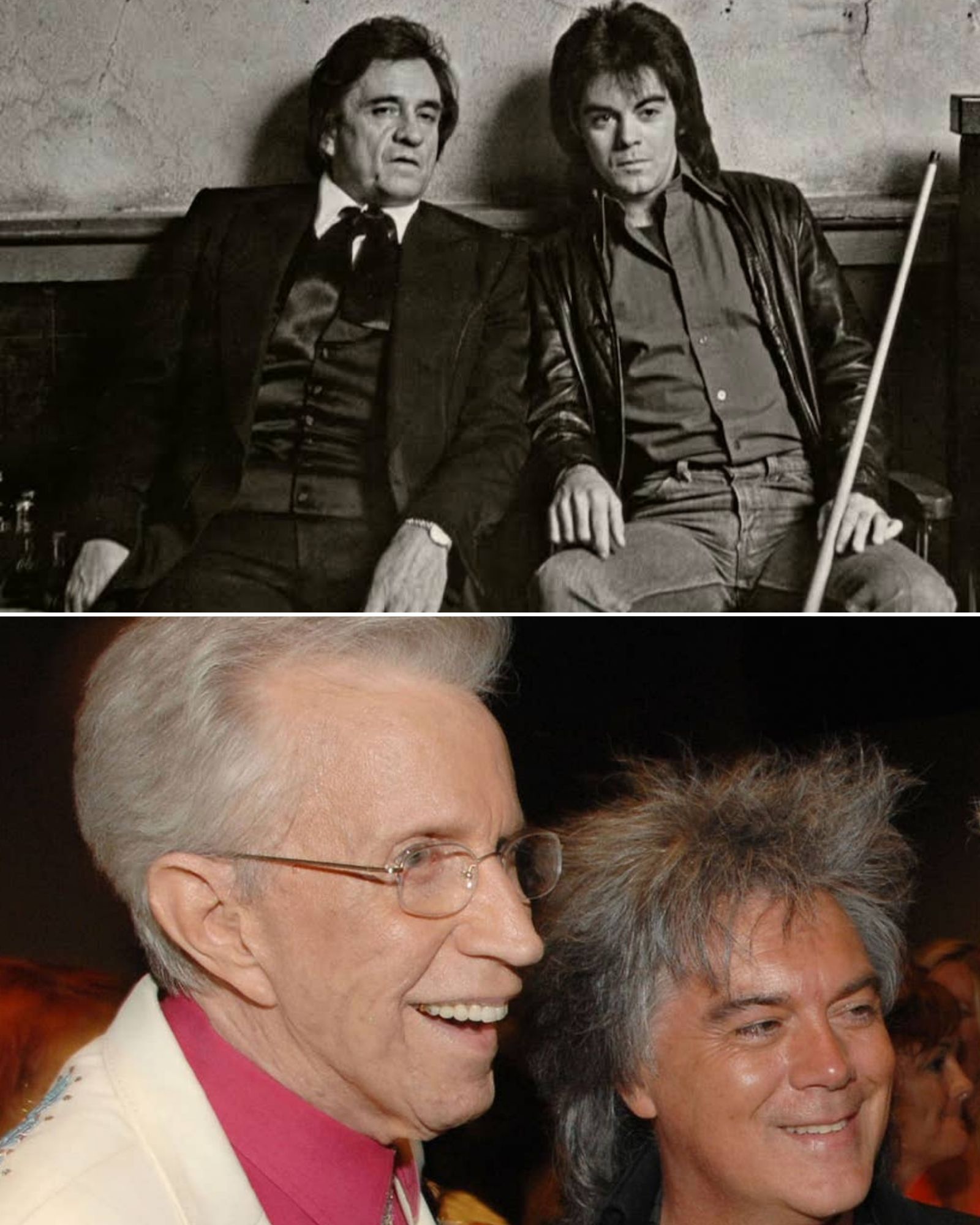
Johnny Cash gave Marty Stuart a simple assignment: deliver a song to Porter Wagoner. More than twenty years passed before Marty Stuart finished the job. By then, Johnny Cash was gone, and Porter Wagoner was preparing what would become the final album of a long recording career.
The song was “Committed to Parkview.” Its journey to Porter Wagoner began in the early 1980s, when Marty Stuart was touring as a member of Johnny Cash’s band.
A song inside an envelope
According to Marty Stuart’s account, listening to Porter Wagoner’s recordings together prompted Johnny Cash to mention a song intended for Porter Wagoner. Johnny Cash handed Marty Stuart an envelope containing a cassette to pass along.
Then the tour ended, everyone returned home, and Marty Stuart forgot to deliver it.
There was no elaborate explanation for the delay. In the story Marty Stuart later told, an ordinary lapse of memory separated the original assignment from its eventual completion. The cassette went undelivered while the years accumulated.
For country fans, the names involved make that small forgotten errand especially striking. Johnny Cash had recognized something in a fellow singer’s work and selected a song accordingly. Marty Stuart, still a young musician working alongside an established legend, had been entrusted with making the connection.
The unfinished errand returns
More than two decades later, Marty Stuart was producing a new album for Porter Wagoner. While choosing material, Marty Stuart remembered the cassette and found it again. The song finally reached Porter Wagoner in the summer of 2006.
The timing gave the delivery a different weight. Johnny Cash had died in September 2003. The songwriter could no longer hear the finished recording or discuss the interpretation with the singer originally chosen to receive the song.
“Committed to Parkview” became a centerpiece of Wagonmaster. Its unsettling portrait of life inside an institution fit the darker storytelling that had long been part of Porter Wagoner’s repertoire. Behind the familiar rhinestone suits and television smile was a singer comfortable with difficult material, including loneliness, desperation, and troubled lives.
The recording offers a reason to think about how singers choose songs. A composition can suit a voice because of its phrasing or range. It can also suit the storyteller behind that voice—the person able to give a listener a sense of the characters and their circumstances.
A final album with something still to say
Wagonmaster arrived on June 5, 2007. Porter Wagoner was 79, approaching a milestone birthday and celebrating fifty years as a Grand Ole Opry member. The album earned enthusiastic reviews and renewed attention. That July, Porter Wagoner even opened for the White Stripes at Madison Square Garden.
Those events give the album a life beyond its status as a final recording. Porter Wagoner was reaching listeners, performing, and presenting new work. The music was available to be judged while the singer was still here to enjoy its reception.
Porter Wagoner died on October 28, 2007, at 80. Wagonmaster became the closing studio chapter of a career that had stretched across generations of country music.
There is no need to imagine that anyone planned the cassette’s long journey this way. Marty Stuart forgot an assignment, remembered it years later, and finally delivered the song. What makes the story memorable is what listeners can hear today: Porter Wagoner singing a composition Johnny Cash had wanted to place in Porter Wagoner’s hands more than twenty years earlier.