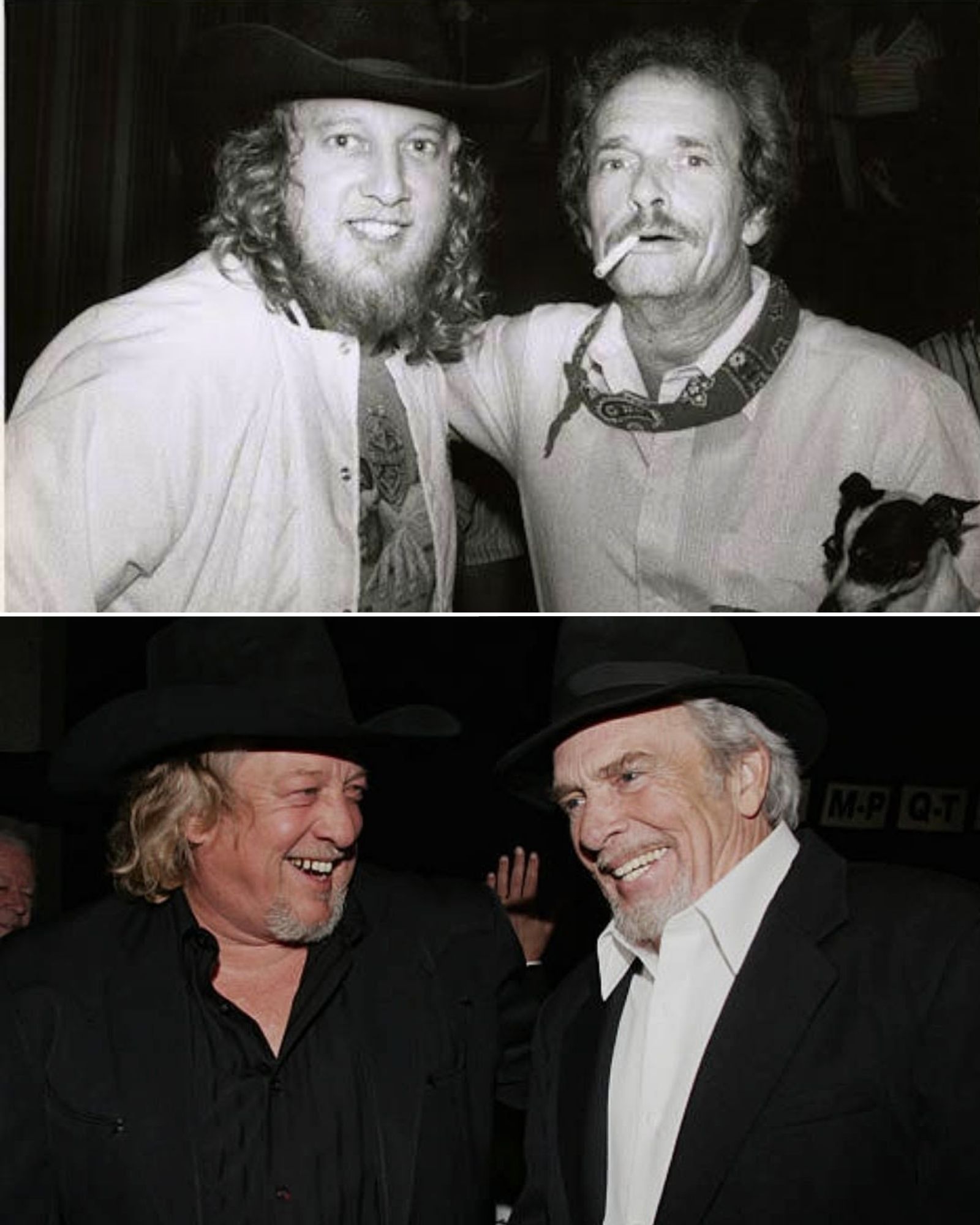
Merle Haggard had heard something worth paying attention to in a young singer’s record. When Merle Haggard invited John Anderson aboard a tour bus, the conversation began with praise for a song. Then came a question John Anderson would remember for decades.
“Do you love it, son?”
Merle Haggard paused, then pressed further.
“Do you really love it?”
For John Anderson, the meaning went beyond whether a particular recording had turned out well. Merle Haggard was asking about country music itself.
A record reached the right pair of ears
According to John Anderson’s recollection on the singer’s official website, guitarist Roy Nichols had brought Merle Haggard a 45 of “Your Lying Blue Eyes.” That small exchange helped introduce an established country star to a voice still finding a wider audience.
At the time the single came out, John Anderson was working with house bands around the South. The recording became John Anderson’s first Top Twenty country hit, helping turn a name on a club sign into a reason for people to show up.
The journey had begun years earlier. John Anderson left Florida for Nashville and took construction work at the new Grand Ole Opry House. Part of that work involved the roof, above the space where performers would eventually stand.
A Warner Bros. recording contract followed in 1976. John Anderson’s unmistakable delivery gradually reached listeners, including musicians whose approval carried particular weight.
Merle Haggard was one of those musicians.
The opening act met a musical hero
The Country Music Hall of Fame’s account places the bus conversation during the first weekend of a series of Merle Haggard concerts in 1980. John Anderson was the opening act.
That invitation mattered beyond the opportunity to perform for larger crowds. Hearing Merle Haggard and George Jones had helped turn John Anderson toward country music in the first place. Now John Anderson was traveling with one of those early influences.
Merle Haggard praised the single before asking the question. John Anderson understood the deeper meaning and answered simply:
“Yes, sir, I really do.”
John Anderson later recalled the excitement of speaking with Merle Haggard and described a friendship that continued for decades. A record passed along by Roy Nichols had become the beginning of a lasting personal connection.
A commitment that outlasted the hits
Commercial success eventually brought new pressures. As John Anderson’s career moved through different record labels, disagreements over musical choices became part of the business.
In the biography published by the Opry, John Anderson credited George Jones and Merle Haggard with an enduring lesson: hold on to the qualities that make a singer distinctive. John Anderson’s account describes arguments over records and a determination to retain creative freedom, even when that determination complicated professional relationships.
The later success of “Straight Tequila Night” and “Seminole Wind” brought another major chapter. Through changing fortunes, John Anderson continued making records recognizable as John Anderson records.
In 2024, John Anderson entered the Country Music Hall of Fame, joining the singers whose work had helped shape that early ambition.
The bus conversation remained a revealing moment in that longer story. Merle Haggard had listened to the record, offered an opening slot, and taken the time to ask what the music meant to John Anderson.
The answer had been short. John Anderson’s career gave listeners many more years to hear it.